Ever wondered what fuels the fire of imagination? Well, cue Albert Einstein’s timeless wisdom: Creativity is intelligence having fun. It’s a mantra we live by, right? But let’s face it, in a world overflowing with distractions, it’s easy to get lost in the noise.
Enter stage left: the magic of literature. We’re not just talking any old books here; we’re talking about the ones that ignite sparks in your mind and set your creativity on fire. Picture this: Twelve Books Every Creative Should Read. Yep, you heard that right. We’ve curated a list that’s bound to inspire, provoke, and maybe even challenge you.
So why bother, you ask? Well, think of it as fuel for your creative engine. Because, let’s be real, creativity isn’t just a gift bestowed upon a select few. Nope, it’s a muscle that needs flexing, a skill that’s honed through practice and exposure to new ideas. Forget the myth of the “natural genius”. We’re all about embracing the journey of growth and discovery. And what better way to kickstart that journey than diving headfirst into the pages of these transformative reads?
The Creative Act: A Way of Being
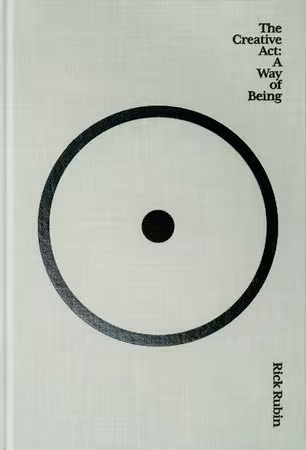
You know those moments when we’re all just feeling stuck, minds cluttered, ideas stagnant, and desperately yearning for that fresh burst of inspiration? It’s precisely during those mental slumbers that we need something extraordinary to jolt us back to life, reigniting the spark of creativity within. Enter The Creative Act: A Way of Being by Rick Rubin—an incredible find that struck a chord deep within my soul. This isn’t your typical self-help guide or a collection of fluffy motivational quotes; it’s so much more.
What I absolutely love about this book is its genuine approach. It’s not trying to sell you a formula for success or put you in a creative box. Instead, it encourages you to find your unique voice and express it with authenticity. The Creative Act: A Way of Being can be characterized as an invitation to a deeply personal journey of self-discovery and growth.
On Writing by Stephen King
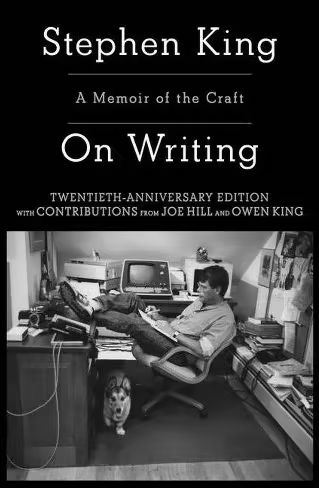
Let me tell you, this book is an absolute treasure trove of wisdom and inspiration, the kind that can fuel your writing dreams like nothing else. On Writing will blow your writerly socks off, in which the author delightfully blends memoir and invaluable advice. Stephen King, the author of this book spills the beans on his personal triumphs and challenges as a writer, making you feel like you’re sitting right beside him, swapping stories over a steaming cup of joe. But that’s not all—King doesn’t hold back when it comes to sharing his secrets of the craft.
King generously imparts the secrets of the craft, offering a treasure trove of practical tips that can revolutionize your writing game. Actually, the book had me grinning from ear to ear. It did something magical—it ignited a fire within me. King makes it crystal clear that writing is a craft, a skill that anyone can learn and refine through practice and dedication.
The Creative Habit
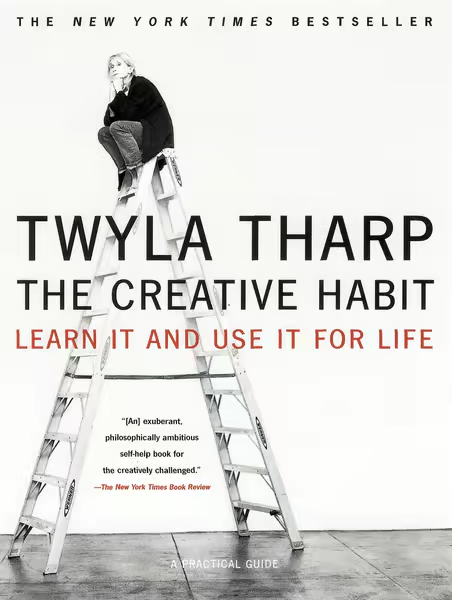
Twyla Tharp’s unconventional approach to creativity, as outlined in her book The Creative Habit. Tharp, a renowned dancer and choreographer, suggests unique methods to overcome the paralysis of starting a creative endeavor. One such method involves an exercise called Egg, a physical solution to the intellectual problem of how to begin. Tharp emphasizes that creativity is not about waiting for inspiration but is instead a result of disciplined work, routine, and the full engagement of body and mind. While she acknowledges the concept of creative DNA,
Tharp dismisses the notion that it alone guarantees artistic success. She underscores the importance of hard work and dedication. known for her extreme commitment, Tharp maintains a rigorous daily routine, encouraging readers to adopt consistent rituals for fostering self-reliance. The book was portrayed as more revealing than her autobiography, invites readers to adopt her ways of dealing with creative blocks
Big Magic
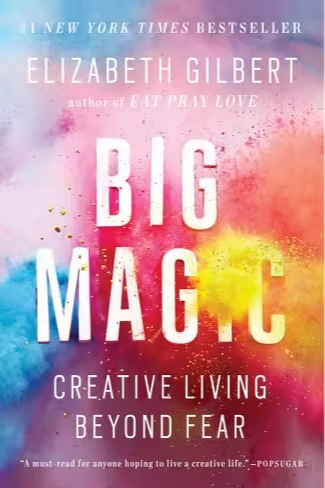
Big Magic by Elizabeth Gilbert explores the universal experience of creative self-doubt. Regardless of who you are, there are likely moments when you’ve compared your creative efforts to those of people you admire. The struggle to be creative is often accompanied by overwhelming bad emotions and inner voices questioning the worth of your endeavors. The nagging feeling that your work is a waste of time can be paralyzing. Gilbert acknowledges that these dark emotions and self-doubt are inherent in the creative process and may never completely disappear.
Instead, she shares extensive personal stories, revealing how she has endeavored to manage these challenges throughout her life. The key, according to Gilbert, is not necessarily to overcome these emotions but to effectively manage them. By developing strategies to navigate and cope with self-doubt, one can prevent these emotions from obstructing creative pursuits and, ultimately, achieve creative success.
The Subtle Art of Not Giving a F*ck
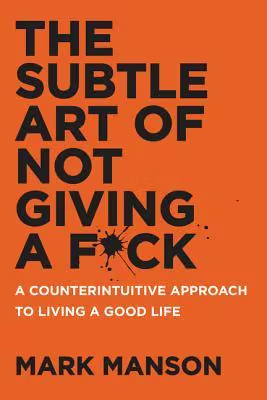
The Subtle Art of Not Giving a F*ck’ by Mark Manson stands out in the saturated space of self-help literature as a refreshing perspective. Manson’s straightforward approach dispenses with unnecessary fluff, providing practical insights on embracing imperfection and concentrating on meaningful priorities. I believe this book holds significance for both designers and creatives who regularly showcase and promote themselves alongside their work. In these situations, encountering dissenting voices from the audience is inevitable.
Drawing from personal experience, it’s remarkably easy to succumb to the influence of negative opinions. It’s crucial to understand that the essence of the book lies not in advocating indifference to everything but in making discerning choices about what truly matters. If you seek a transformative read that encourages a more authentic and holistic approach to life’s decisions, this book is a definite must-read.
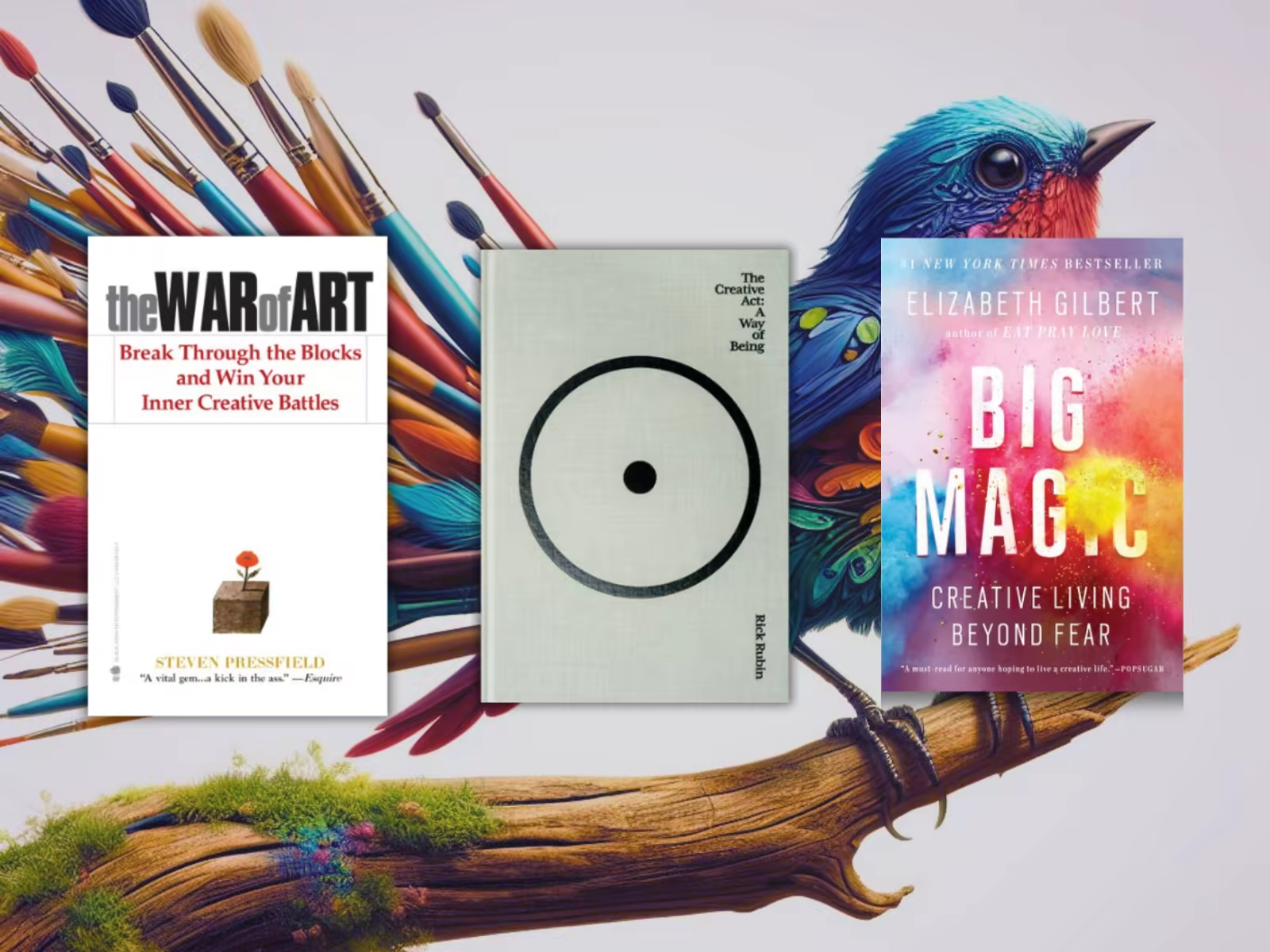
The War of Art
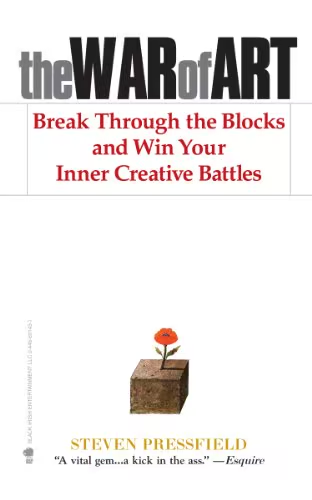
Have you ever wanted to pursue writing a book, starting a business or even recording a song, Steven Pressfield offers guidance in The War of Art, divided into three parts. In the first section, Pressfield pinpoints the enemy hindering our creativity. In the second part, he provides insights on overcoming this adversary. The third part delves into his personal experiences as a creative, emphasizing the importance of doing one’s best work. So, who is this formidable enemy? Pressfield terms it the resistance and it resides within ourselves.
It manifests as self-doubt and a fear of failure, hindering the realization of our true creative potential. Resistance often disguises itself as procrastination or rationalizations for not pursuing our desired endeavors. Fear not, as Pressfield has conquered the resistance and is ready to guide us in doing the same. He imparts insights on doing your best creative work after overcoming resistance.
Rest
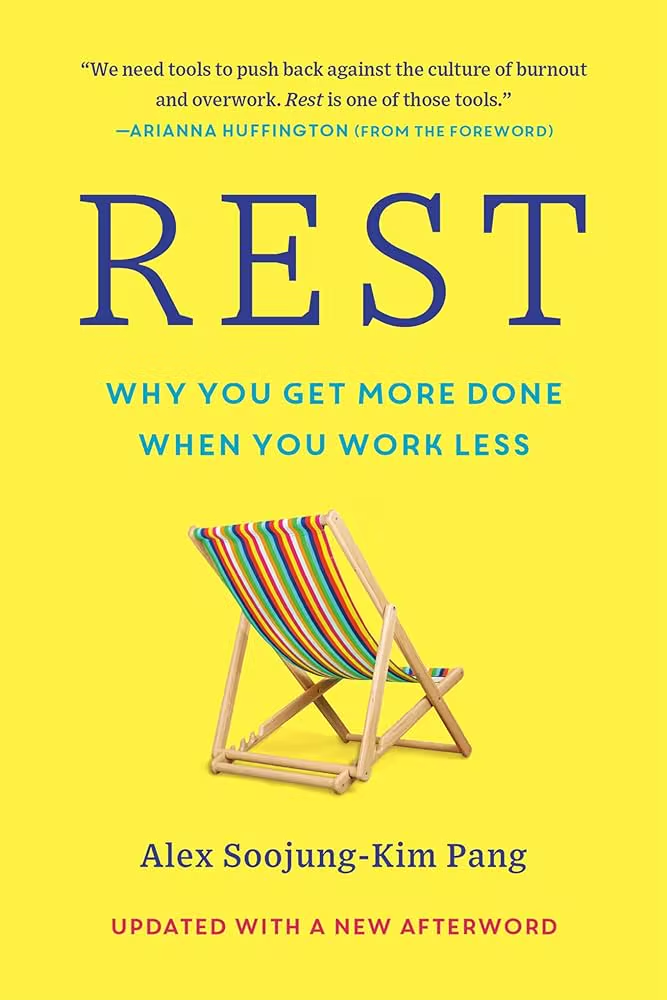
The next book is called Rest. It has a profound impact, especially for those who find themselves constantly on the verge of burnout and feel unable to afford much-needed rest. It delves into the science of rest, emphasizing that it is not just the absence of work but is equally crucial in the creative process.In a society where overwork is prevalent and people take pride in not sleeping, working long hours, and pushing themselves to the limit, Rest offers a refreshing perspective. it serves as a counter to the prevailing culture of burnout.
The book discusses the challenges of our overworked society, highlighting factors such as longer commutes, significantly extended work weeks, and the misconception that creative work can be solely measured by the number of hours invested. One notable quote from the book resonates with me: A day that starts with work creates rest that can later be enjoyed without guilt.
Drawing on the Right Side of the Brain
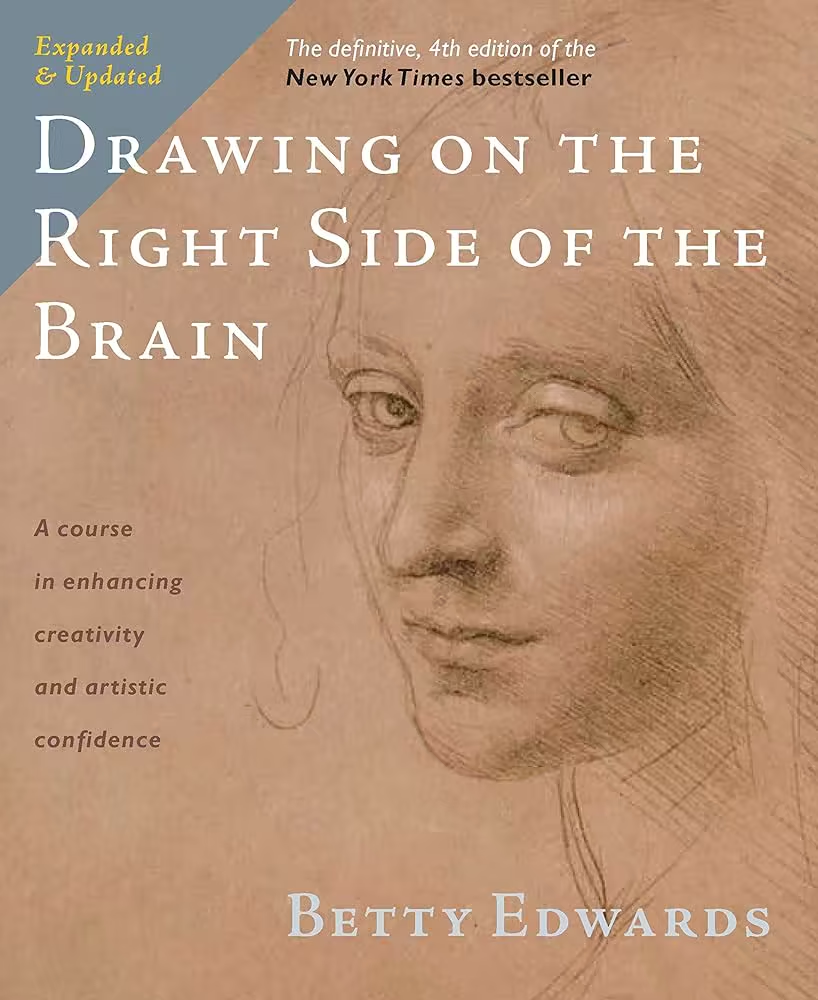
If you’ve never drawn before, you might have entertained the idea that becoming a proficient drawing artist was beyond your reach. However, this book serves as a game-changer, with readers experiencing an almost magical improvement in their drawing skills. It is a transformative guide designed for both established artists and those aspiring to develop their artistic abilities. The book empowers individuals to break free from the constraints of overthinking and preconceived notions, enabling them to observe and replicate what lies before them.
The emphasis is placed on activating perceptual centers and recognizing the significance of hand-eye coordination. This book takes you on a journey away from ambiguity and paradox, guiding you towards a clearer understanding of the world around you. I strongly recommend this book especially for young individuals embarking on their artistic journey. It holds a timeless status for a reason.
Artists’s Way
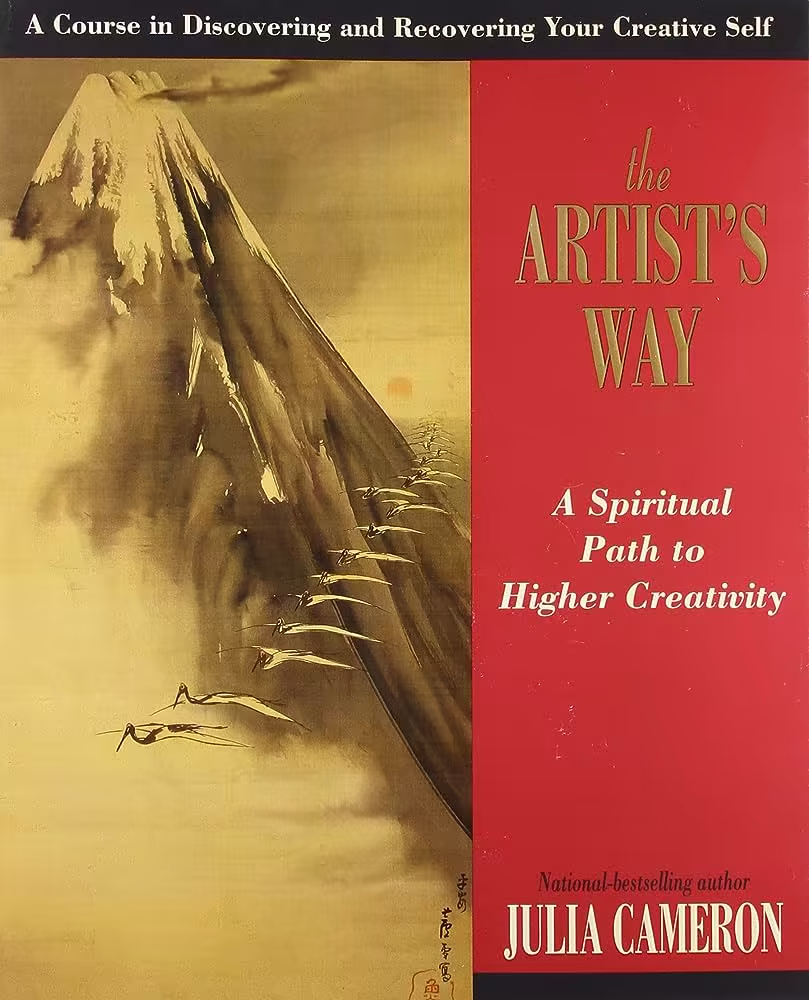
This book requires something more from you for just being placed on a shelf; it’s akin to a promise. Essentially, it lays out a 12-week challenge for yourself. What I appreciate about this book is that it establishes a sense of commitment. It all begins with the concept of morning pages — every morning when spill about two to three pages, roughly 750 words, of unfiltered, unscripted, stream of consciousness writing to purge the mental clutter and pave the way for creation. As you traverse each week, the book morphs into a creative personal mentor.
It’s not just about reading but actively engaging in a transformative process. The author not only provides beautiful quotes and inspiration but also includes exercises to guide you through each week. I can attest to the effectiveness of this approach. So if you’re looking to build a robust foundation of commitment for your creative pursuits. do yourself a favor a grab a copy of this book
The Obstacle is The Way
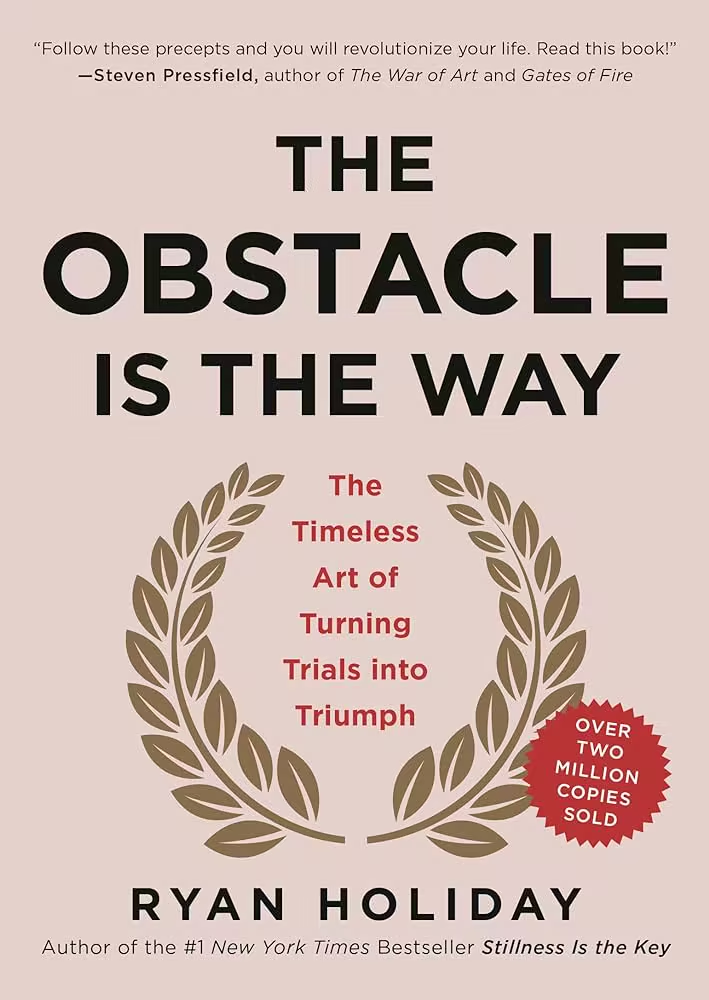
If you’re not familiar with this book or with the work of Ryan Holiday, it is rooted in the ancient philosophy of Stoicism, which is a philosophy that dates back to ancient Greece and provides a framework to contextualize life events. Stoicism advocates taking responsibility for your own happiness, emphasizing independence from others for satisfaction or contentment in life, including creative pursuits. The title refers to the concept that obstacles, whatever they may be, hinder your path from point A to point B, should not be avoided or ignored.
Instead, these obstacles should be the focal point of your attention. Overcoming them can provide the necessary momentum and velocity to propel you forward. The Stoic principles outlined by Holiday – perception, action, and will – serve as a powerful catalyst for unlocking creativity. By altering our perception of challenges, we open ourselves to new possibilities and unconventional solutions.
Wabi-Sabi
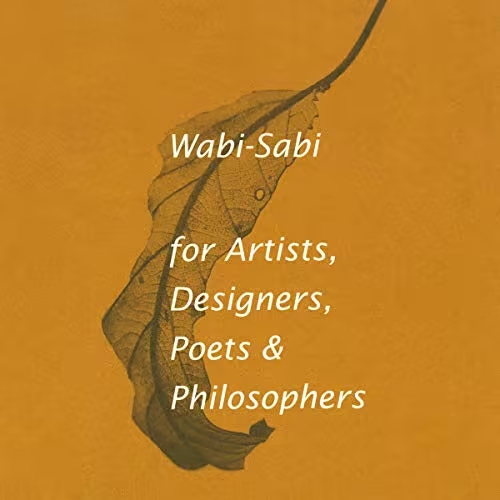
A very thin, quiet, unassuming book perfectly aligned with the topic of creativity, Wabi-Sabi for Artists, Designers, Poets, and Philosophers by Leonard Koren introduces readers to an ancient Japanese philosophy known as wabi-sabi. This philosophy is deeply rooted in the notion that the true beauty and soul of something, whether it be architecture, pottery, or life itself, lie in imperfection and the object’s impermanence. Wabi-sabi challenges individuals who are detail-oriented and focused on perfection, symmetry, and precision.
It encourages a shift in perspective, suggesting that the pursuit of flawlessness can lead to a certain distance from the essence of the subject. The philosophy emphasizes that objects with impermanence and imperfection are more relatable and authentic, providing a connection to the everyday human experience. In essence, Leonard Koren’s Wabi-Sabi is a thought-provoking addition to consider in your bookshelf.
Steal Like An Artist
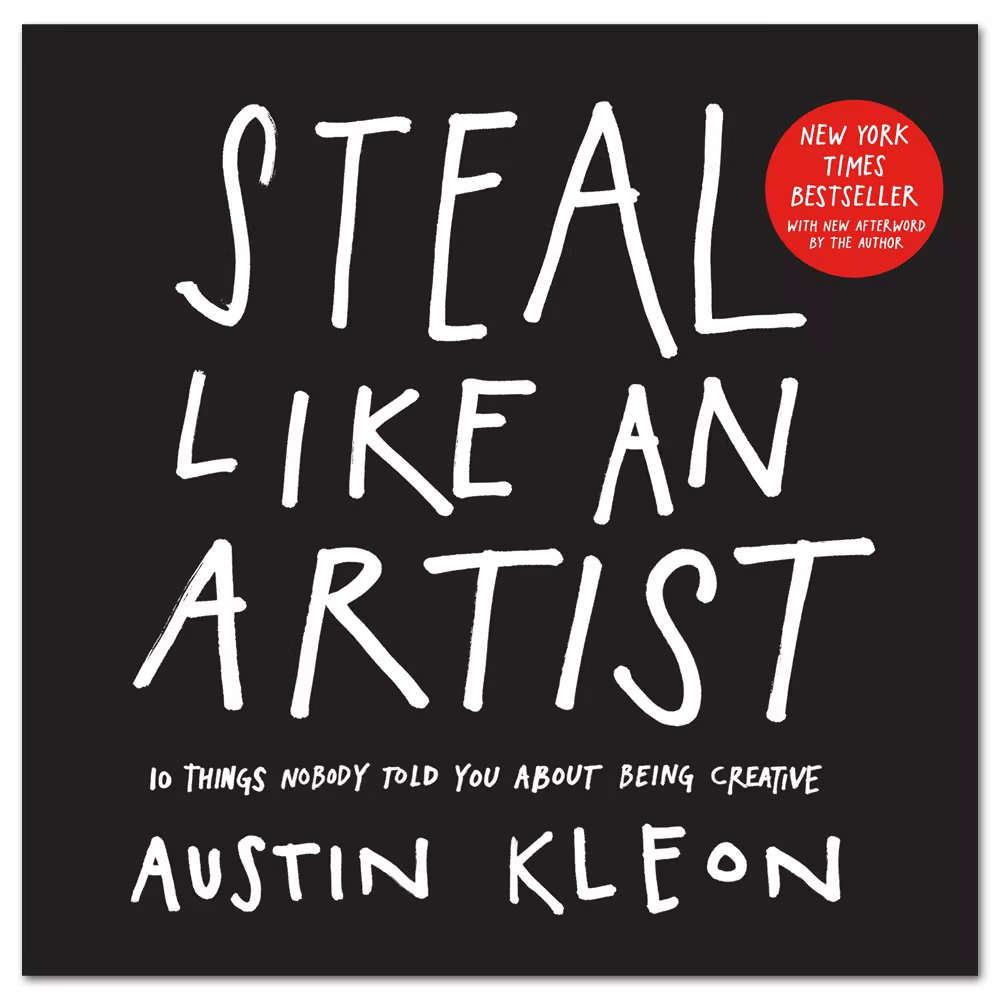
“I believe human creativity primarily operates through the process of recombination. We excel at remixing existing elements rather than generating entirely novel creations. Rather than conceiving entirely new beings, we tend to modify existing ones… This innate ability to combine and reconfigure forms the basis of our creative endeavors. Unlike envisioning entirely new colors that our brains may not be equipped for, we can conceptualize variations of familiar colors and experiment with themes to generate creative ideas”. That’s a quote from fantasy writer Sanderson.
In this book, Kleon, talented writer and artist unveils a fresh perspective on creativity, emphasizing that nothing exists in isolation and that all artists draw inspiration from their influences. This little gem of a book that will transform the way you think about creativity. It challenges the sanctity of originality and nudges us to adopt the audacious notion of pilfering ideas—metaphorically, of course!