In this collection of travel and trip books, we dive into the epic tales that ignite the flames of wanderlust, from medieval manuscripts to modern marvels. Think of it as a literary jet lag without the cramped legroom. From Marco Polo’s Silk Road escapades to Ibn Battuta’s mileage marathon, we’re setting sail on a sea of prose, guided by the compass of history.
It’s a celebration of the written word’s power to transport us, sometimes even more effectively than a GPS. And for the adventurous souls seeking more than just geographical escapades, we’ve got a bonus round – travel books that double as coming-of-age tales, challenging societal norms like a rebellious teenager defying a curfew. These narratives, more rebellious than a free-spirited hitchhiker, not only take you on a physical journey but also a mental one. Or how about a coming of an age story that challenges the societal misery.
The Travels by Marco Polo
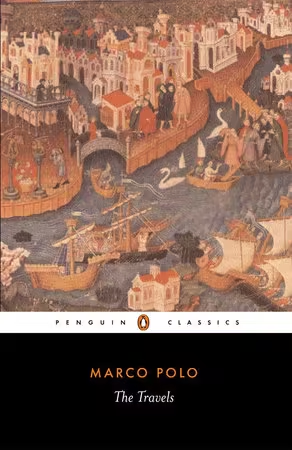
An absolute classic. Polo’s tales of his journey along the Silk Road are a mesmerizing blend of fact and fantasy. It’s like a medieval version of a travel blog complete with exotic locales and strange customs, becoming a cultural keystone in understanding the medieval world. Imagine, if you will, embarking on a journey through the silk-laden corridors of time, guided by Polo’s vivid prose. However, skepticism tinges the edges of Polo’s narratives. The line between fact and embellishment blurs, leaving readers to ponder the true extent of Polo’s travels.
Was he truly the first European to set eyes on China, or was he a masterful storyteller crafting a fantastical narrative? Yet, it is precisely this ambiguity that lends The Travels its enduring allure. Polo’s tales, whether factual or fanciful, have echoed through centuries, shaping Western perceptions of the East and fueling the imaginations of explorers and armchair adventurers alike.
Ibn Battuta’s Rihla
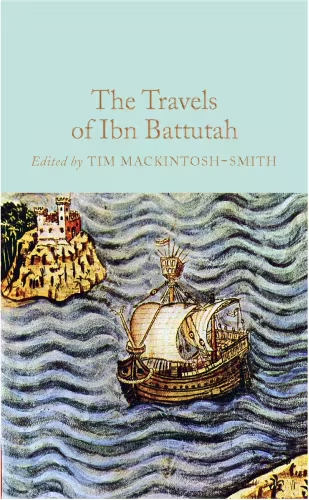
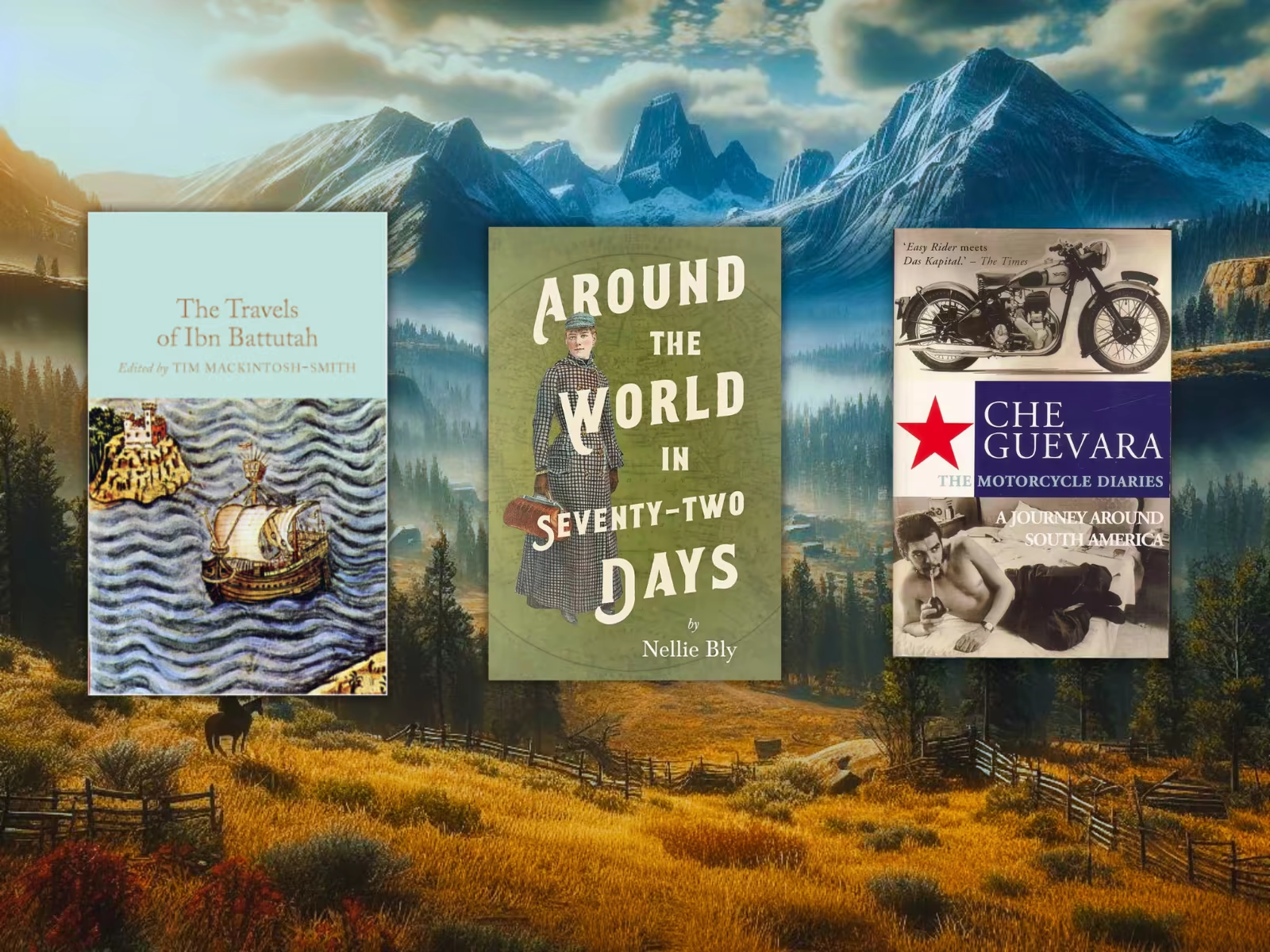
This 14th-century Moroccan explorer covered a whopping 75,000 miles across Africa, Asia, and Europe. His account provides a rich tapestry of the diverse cultures he encountered, from bustling cities to remote villages. One of the defining features of Rihla is Battuta’s keen eye for detail. Through his eyes, we witness the ebb and flow of cultures, the rhythmic pulse of trade routes, and the vibrant mosaic of human existence.
What sets Battuta apart is not just his geographical exploration but the intellectual journey he undertakes. His encounters with scholars, mystics, and rulers add a layer of depth to the narrative. The Rihla is not merely a chronicle of places; it’s a dialogue with the minds of the era, a conversation that transcends borders and centuries.
The Odyssey
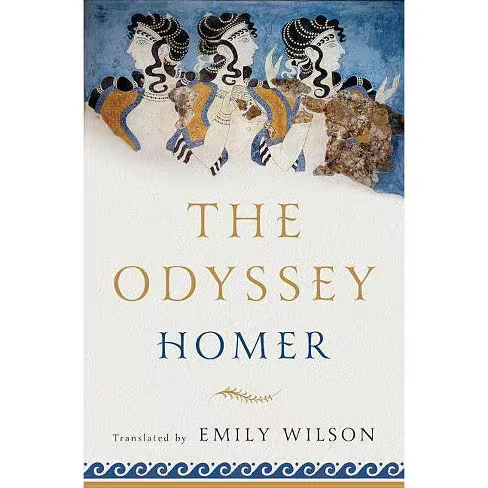
Alright, not exactly a travelogue, but Odyssey’ epic journey home after the Trojan War is a timeless adventure that will transport you through mythical landscapes and challenge your notions of heroism. While not a conventional travelogue by modern standards, the Greek poet’s masterwork serves as an indelible precursor to the genre. Much like a medieval Marco Polo or Ibn Battuta, Homer’s portrayal of Odysseus encapsulates the spirit of exploration, illuminating the multifaceted nature of the human odyssey.
The encounters with mythical creatures, the trials of endurance, and the unyielding quest for home mirror the quintessential elements found in later travelogues. Homer’s odyssey, in essence, becomes a timeless testament to the human inclination to seek, explore, and ultimately find oneself amid the vast richness of human civilization around the world.
Journals of Lewis and Clark
Moving on to the American frontier, this duo’s exploration of the newly acquired Louisiana Territory is an awe-inspiring account of grit and expedition. The prose, at once vivid and evocative, immerses readers in the untamed beauty of the wilderness, capturing the essence of a young nation teetering on the precipice of discovery. Within the pages of this historical masterpiece, the duo’s observations offer more than mere geographical insights; they unveil a poignant narrative of human resilience and cooperation.
Lewis and Clark’s encounters with Native American tribes, their struggles against the unforgiving elements, and the unwavering camaraderie among the Corps of Discovery paint a multifaceted portrait of a pivotal moment in American history. Their journals stand as a literary testament to the audacious adventurers who shaped the early fabric of the United States. Their
The Silk Roads
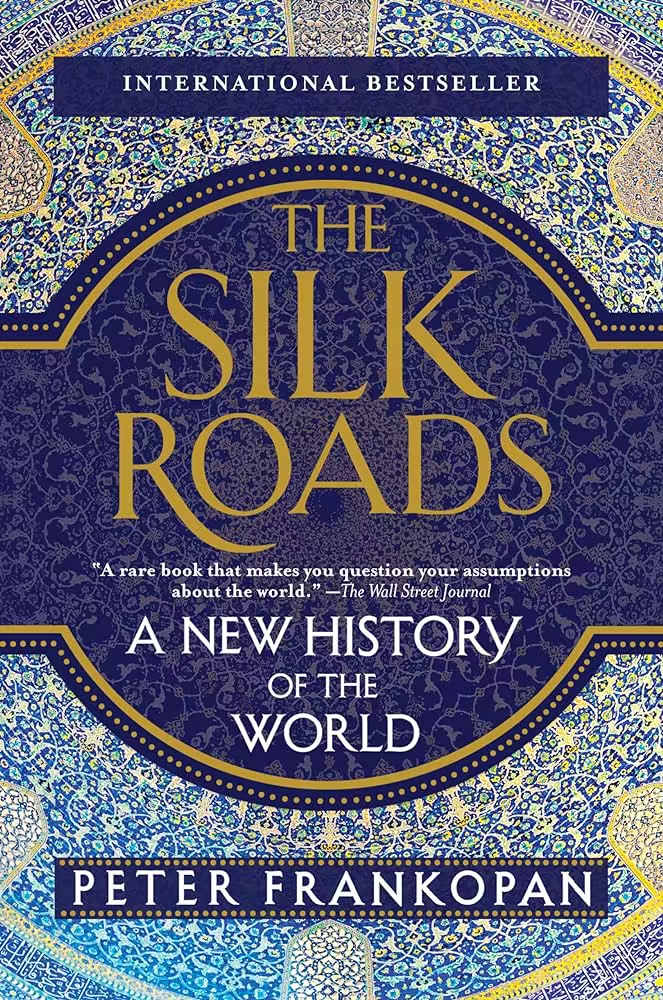
While not a traditional travelogue, this book explores the historical connections between East and West along the Silk Roads. It’s like a journey through time and space, connecting civilizations and reshaping perspectives. Instead of recounting a single adventurer’s exploits, Frankopan presents a panoramic view of the interconnected world along the historic Silk Roads. He deftly guides readers through the ebb and flow of civilizations, illuminating the vibrant tapestry of cultures, trade, and ideas that shaped the course of history.
Much like the classic travelogues that narrated the exploits of Marco Polo or Ibn Battuta, Frankopan’s narrative is a testament to the transformative power of exploration. He invites readers to traverse the ancient trade routes, from the heart of China to the shores of the Mediterranean, unveiling the myriad connections that defined the human experience.
Arctic Dreams
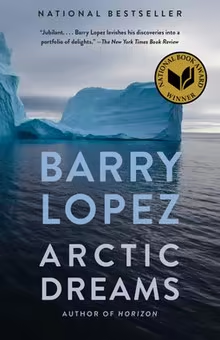
Arctic Dreams by Barry Lopez stands as a frozen masterpiece, an icy account that blends together the beauty and harshness of the Arctic with prose so vivid it practically shimmers with the Northern Lights. Lopez, seasoned in naturalistic storytelling, takes us on a journey through the pristine wilderness of the Arctic, capturing the essence of its stark beauty and unforgiving terrain. Lopez’s ability to evoke the Arctic’s mystique without resorting to the mere recitation of facts. Like many great writers, Lopez’s narration seemingly suspends time.
It is a symphony of senses, invoking the biting cold, the crisp scent of snow, and the ethereal silence that envelops the polar landscape. In Reading this essay, you’ll find yourself yearning for the chill winds of the far north, the dance of polar bears on the ice and musk oxen on the chill tundra , or the haunting beauty of an Arctic sunrise.
Around the World in Seventy-Two Days
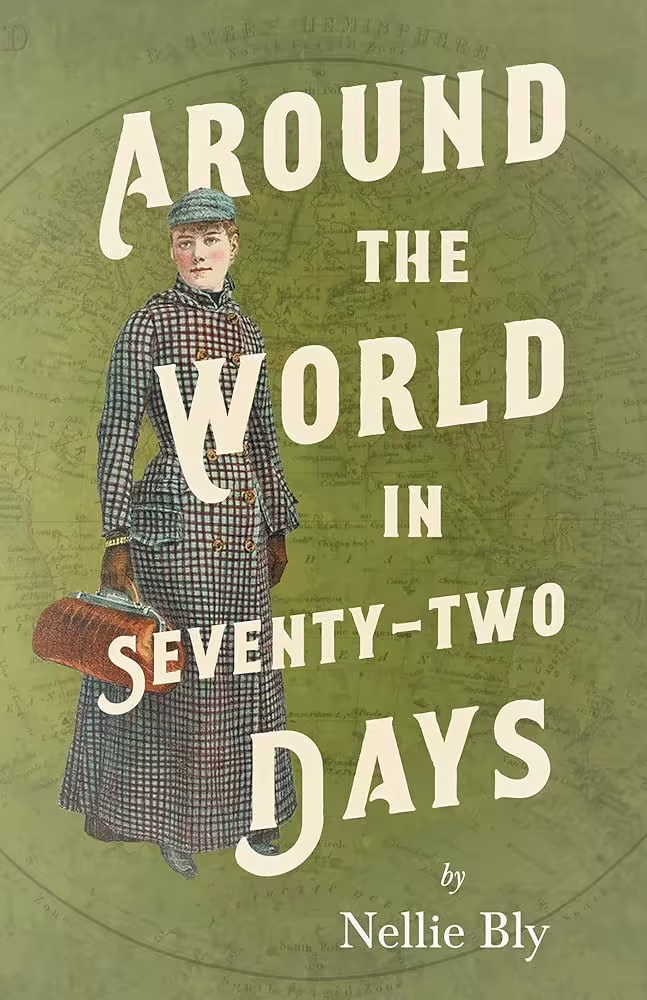
Published in 1890, a time when the notion of circumnavigating the globe in less than three months seemed as fantastical as Jules Verne’s fiction, Bly’s audacious journey captivates with its daring spirit and unyielding determination. As the pioneering investigative journalist embarked on her whirlwind adventure, she became the embodiment of intrepid exploration, challenging societal norms and shattering gender expectations in an era that often confined women to domestic spheres. Bly’s narrative unfolds like a carefully crafted symphony of destinations, each note resonating with the allure of the unknown.
Bly’s narrative unfolds like a carefully crafted symphony of destinations, each note resonating with the allure of the unknown. Her infectious enthusiasm, unapologetic curiosity, and her resilience in the face of adversity leaves the reader transported not only through geographical coordinates but also across the boundaries of societal conventions.
The Travels of Sir John Mandeville
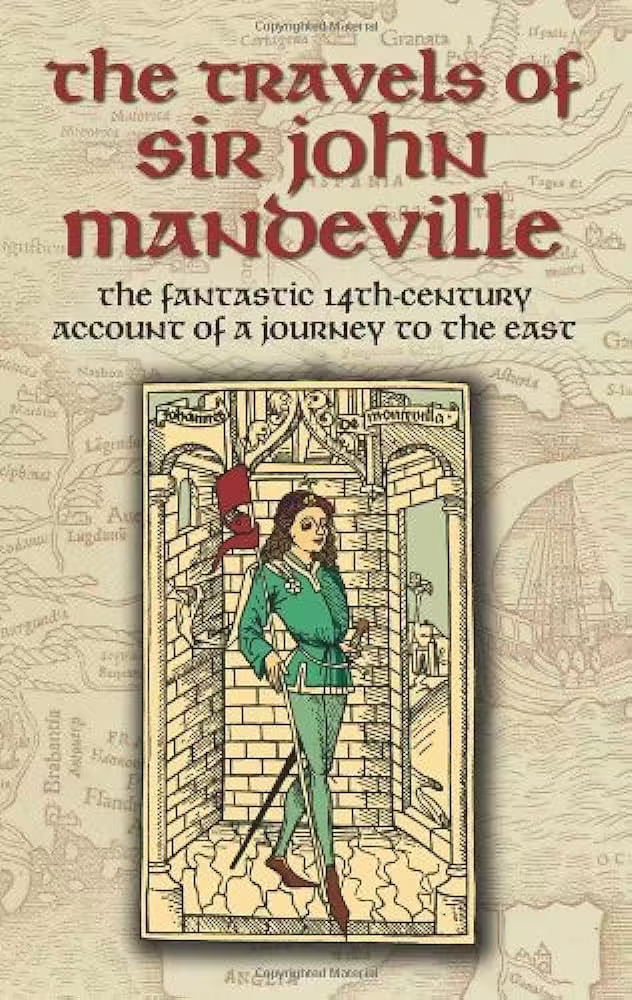
Brace yourself for a dose of medieval wanderlust as Mandeville recounts his supposed globetrotting adventures. The twist? Scholars believe much of it to be, well, more fiction than fact. This enigmatic account, attributed to an English knight of the 14th century, takes us on a journey across the known and unknown realms of his time. What makes Mandeville’s narrative a compelling addition to this curated list is its intriguing blend of fact and fantasy, as the author weaves a mesmerizing story of exotic lands, mythical creatures, and curious customs.
While modern scholars debate the veracity of Mandeville’s exploits, his work undoubtedly captivates with its vivid descriptions, offering readers a unique lens into the medieval imagination and a glimpse of the world as it was perceived in those times.
The Motorcycle Diaries
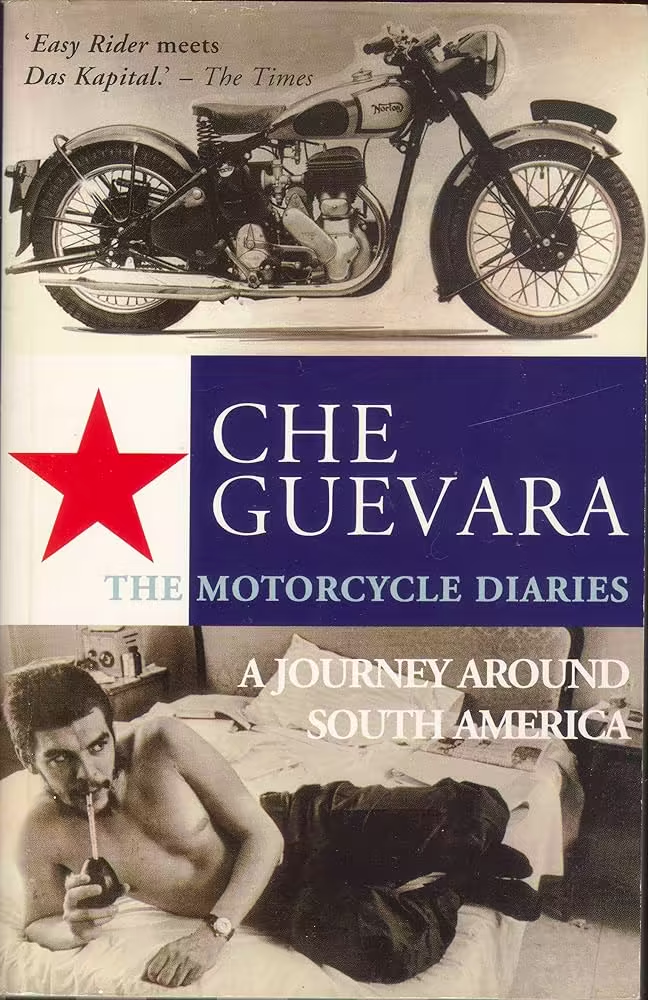
One often overlooked masterpiece that deserves a prominent place is The Motorcycle Diaries by the iconic revolutionary, Che Guevara. While the book is often associated with Guevara’s political awakening, its profound exploration of the human condition and the stark realities of poverty elevates it beyond a mere revolutionary manifesto. Guevara’s journey across South America with his friend Alberto Granado is an odyssey of self-discovery which unfolds against a backdrop of breathtaking landscape.
But what truly captivates is Guevara’s visceral account of the abject poverty he encounters.The motorcycle becomes a metaphorical vehicle for unveiling the harsh truths lurking beneath the surface of society. This book serves as a poignant reminder that even the most basic human needs can become elusive when societal structures fail to prioritize the well-being of all.