Have you ever stopped to think about the ways in which science fiction has influenced our world? From inspiring scientific and technological innovations to shaping our understanding of the future and our place in the universe, science fiction has had a significant impact on society. Similarly, the inception of this speculative genre gave birth to a new creative trend that has become well received by the masses, this was marked as the beginning of a new era of literature occupying a huge space in pop culture.
The way stories are told and themes are explored is changed, and this has inspired writers to think about the consequences of science and technology and how they might shape society and the human experience, while also allowing them to explore philosophical and ethical questions, such as what it means to be human and the nature of consciousness, what goes beyond our observable reality, etc.
In this article, we’ll explore some of the most influential sci-fi books that have contributed to the development and popularity of this genre.
Frankenstein
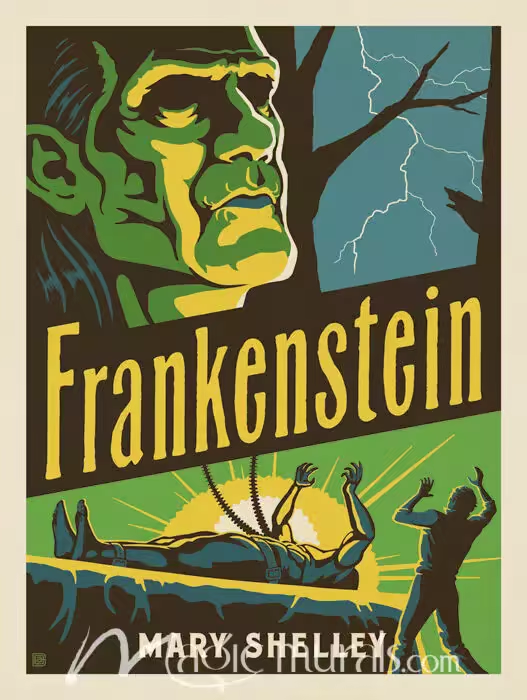
Considered to be the earliest science fiction works, Frankenstein or the Modern Prometheus is one of the first cautionary tales about artificial intelligence foreshadowing an ominous future where science can allow regular intellectual beings having such omnipotence. Mary’s Shelley Frankenstein opened the door to many speculative ideas where science plays a major role on the essential elements of a literary story. The novel explores the potential dangers and consequences of playing God and using science to achieve goals that may be beyond our understanding or control.
It also touches on themes of isolation, rejection, and the blurred lines between good and evil. Frankenstein has had a lasting impact on science fiction literature and popular culture, and has inspired numerous adaptations and retellings.
Nineteen Eighty-Four
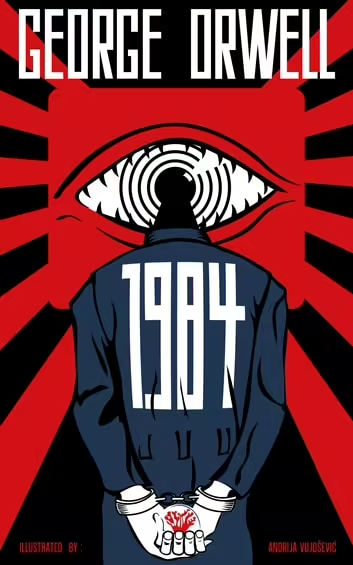
Expected to be on this list, 1984 by George Orwell is considered by some to be the pioneer in dystopian universes, this novel explores the dangers of totalitarianism and the abuse of power. The story is set in a bleak and oppressive world where the government, led by the enigmatic figure of Big Brother, controls every aspect of citizens’ lives, and truth is constantly being revised and rewritten to suit the needs of the ruling party. The book’s themes of government surveillance, propaganda, and thought control are as relevant today as they were when Orwell wrote the book in the aftermath of World War II.
Nineteen Eighty-Four has influenced countless works of fiction and popular culture, from The Handmaid’s Tale to The Matrix. Its impact on the genre of dystopian fiction cannot be overstated.
The Ultimate Hitchhiker’s Guide to the Galaxy
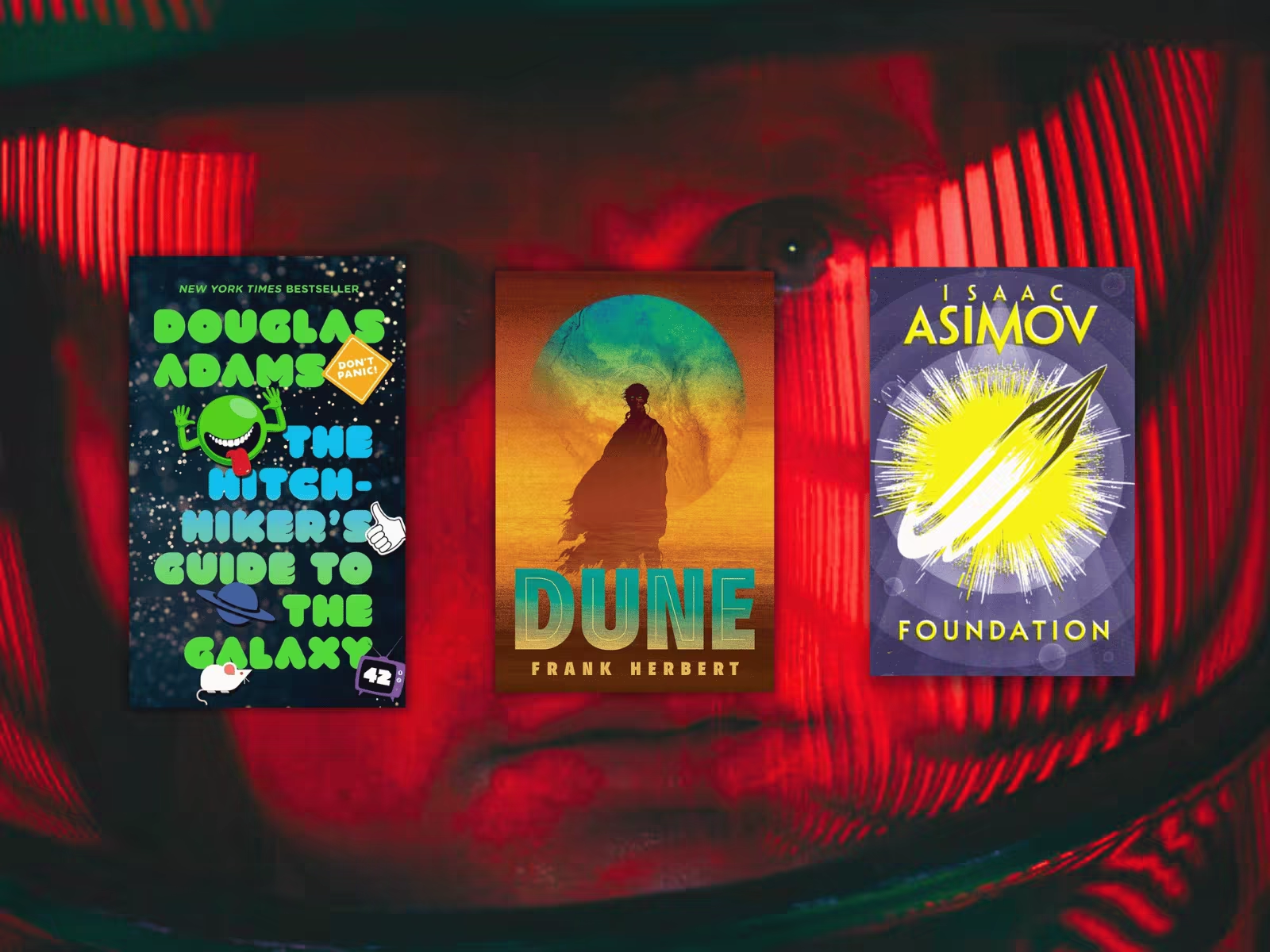
Subverting traditional science fiction conventions. The Hitchhiker’s Guide to the Galaxy doesn’t take itself too seriously and often pokes fun at the genre, making it a refreshing and entertaining read for fans of science fiction. Douglas Williams took another turn and wrote a five-part series that follows the misadventures of an unwitting human named Arthur Dent, who is whisked away from Earth just before it’s destroyed to make way for an intergalactic bypass.
He’s accompanied by his friend Ford Prefect, a researcher for the eponymous Hitchhiker’s Guide to the Galaxy, who gives him some much-needed guidance as he navigates the bizarre and often absurd universe around him. Douglas Adams skillfully blends humor, wit, and philosophical musings in exploring profound themes like life’s meaning and the universe’s nature. HHGTG, renowned for its humor and absurdity, is a cult classic inspiring various adaptations.
Dune
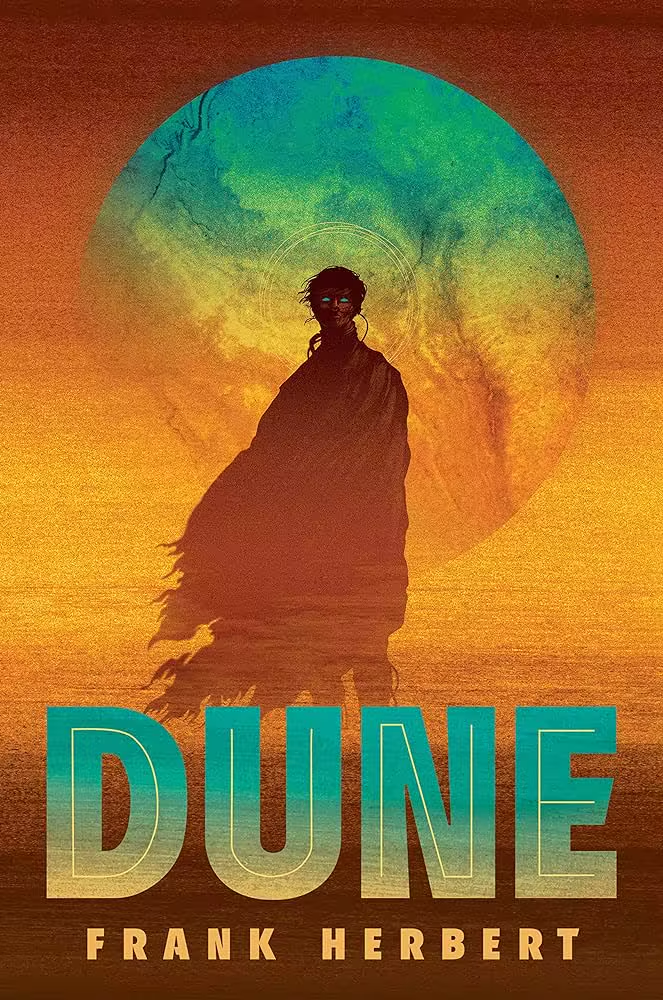
Impossible to escape this list, Dune by Frank Herbert is inarguably the forefront in its genre. This ’65 chart-topper is a colossal brew of grandeur, with Arrakis, the novel’s stage, boasting rich detailing and a fully-fleshed existence—its unique culture, history, and ecological dance. Herbert was able to devise a setting with a sheer scope and complexity of the world. The story touches into profound philosophical and political territories: the perils of unbridled power and the repercussions of technological leaps. The narrative follows young nobleman Paul Atreides navigating Arrakis’ political
challenges and leading the native Fremen against a corrupt Empire and the malevolent Harkonnens. Dune’s enduring impact extends to influencing major works like Star Wars and Nausicäa of the Valley of the Wind. Additionally, the 1992 Dune II video game holds historical significance as the original real-time strategy game.
Foundation
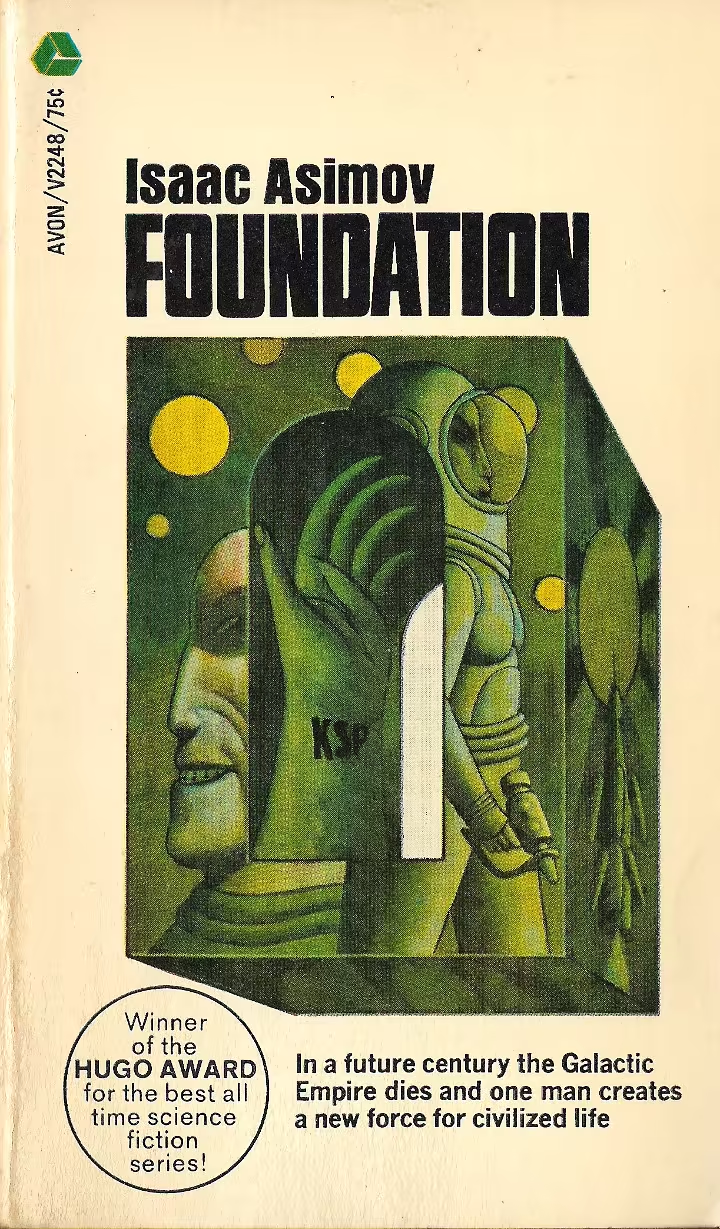
Isaac Asimov’s Foundation series stands as a cornerstone in sci-fi, renowned for its intricate world-building and profound exploration of complex themes. So, what’s the scoop? Foundation unfolds across millennia in a future universe where humans have spread across diverse planets. Hari Seldon, a mathematician armed with psychohistory, a tool predicting the fate of entire societies. Impressive, right? Yet, Seldon’s foresight sparks political chaos, unleashing wars, betrayals, and lots of twists and turns. This book’s significance lies in its intellectual weight.
Asimov delves into grand ideas—power, religion, and human nature—with a captivating blend of entertainment and contemplation. The notion of a “Galactic Empire” introduced here has left an indelible mark on sci-fi tales. Foundation’s impact resonates deeply in hard science fiction, winning the 1966 Hugo for the best all-time series. Asimov’s legacy thrives in a genre shaped by his visionary storytelling.
Fahrenheit 451
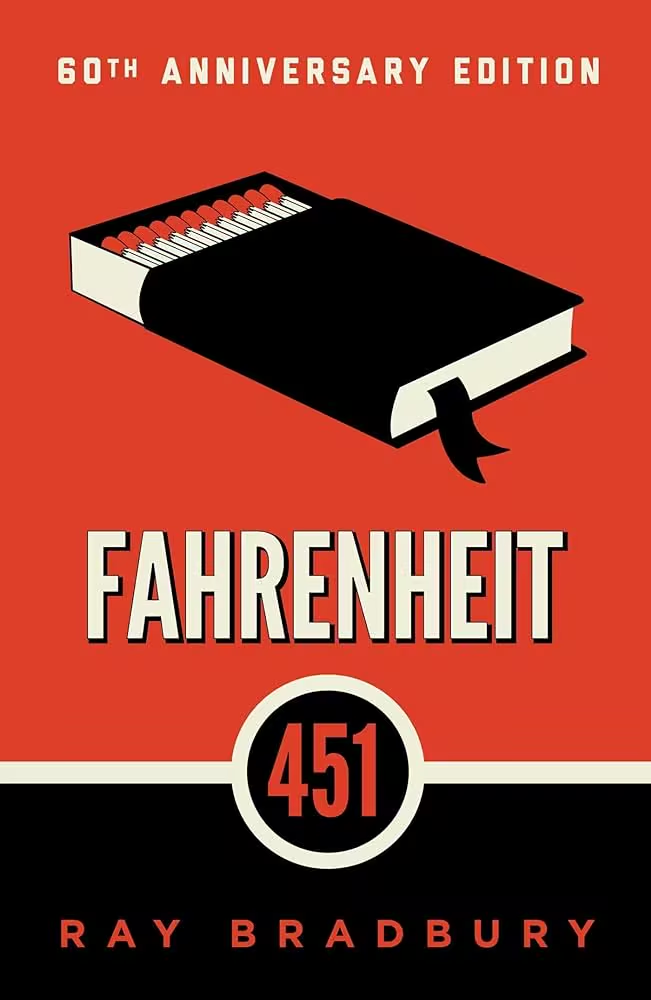
Ray Bradbury’s Fahrenheit 451 spins a bone-chilling yarn about a world where books face prohibition and “firemen” are tasked with incinerating any discovered. This timeless piece of science fiction, penned in 1953, plunges into the shadowy abyss of censorship, conformity, and the ominous aftermath of stifling dissenting notions. The government in this dystopian future, actively snuffs out any form of free thought and Bradbury masterfully uses this story to comment on the oppressive nature of censorship, and the manipulation of society that follows.
The central character, Guy Montag, an inquisitive fireman, grapples with questioning the government’s deeds and his own convictions. Along his journey, he encounters a cadre of rebels committed to memorizing books for the preservation of knowledge and culture, catapulting the narrative into uncharted territories. Fahrenheit 451 stands as an iconic work in sci-fi, leaving an indelible mark on contemporary media.
Foundation
Brave New World written by Aldous Huxley, is a classic science fiction novel that was published in 1932, but it still manages to be a relevant and thought-provoking read. Transporting readers to a dystopian future dominated by an oppressive government wielding advanced technology and manipulative mind control, the novel explores the dire consequences of eroding individual freedoms. From birth, citizens are subjected to government-induced brainwashing, rendering them mere automatons devoid of independent thought.
Huxley provocatively probes existential questions like the nature of happiness and the essence of humanity. Characters, masking contentment, evoke deeper reflection. The novel’s power lies in its poignant portrayal of the human experience amid technological advancements. Huxley emphasizes enduring humanity, emotions, desires, and imperfections. This poignant message, relevant even in our advanced era, cements the novel’s status as a timeless classic.
The War of the Worlds
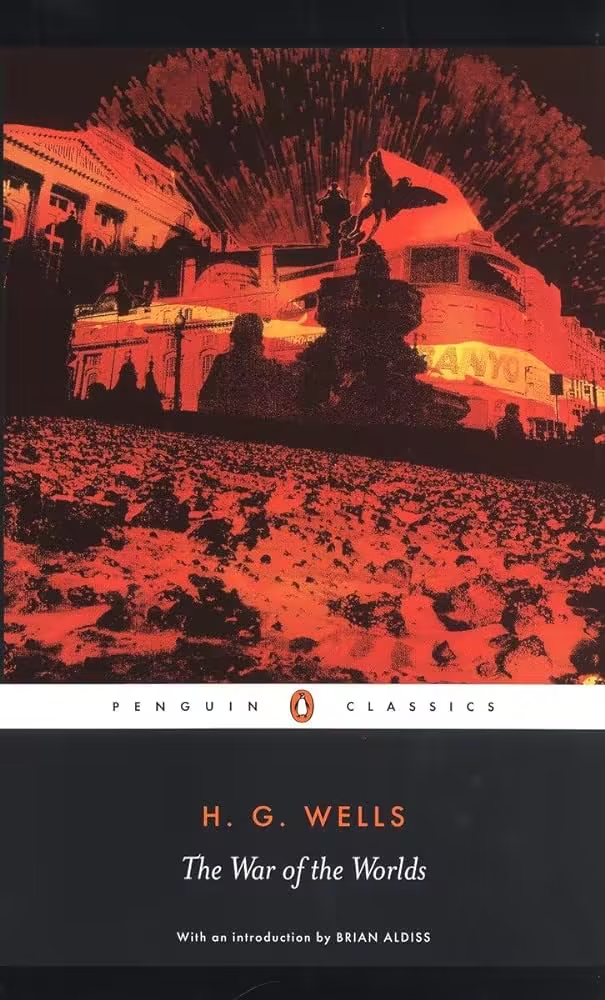
The War of the Worlds, a novel by H.G. Wells, published in 1898, is considered a classic of science fiction and is one of the most influential works of the genre. This tale of Martian invaders wreaking havoc on Earth is no warm and fuzzy encounter. These extraterrestrials aren’t here for a cozy chat; they’re on a mission to obliterate everything in their path. Our protagonist, an unrelated H.G. (no family ties to the author, by the way), grapples with survival amid the chaos caused by Martian tripods stomping through the countryside.
Sure, it hit the shelves way back in 1898, but don’t let the vintage scare you off. The writing style may differ a tad, but trust me, it’s a gripping, nail-biting narrative. The influence of War of the Worlds echoes through the ages, popping up in everything from Independence Day’s White House boom to Doctor Who’s intergalactic nods. This Wells classic? Timeless.
Neuromancer
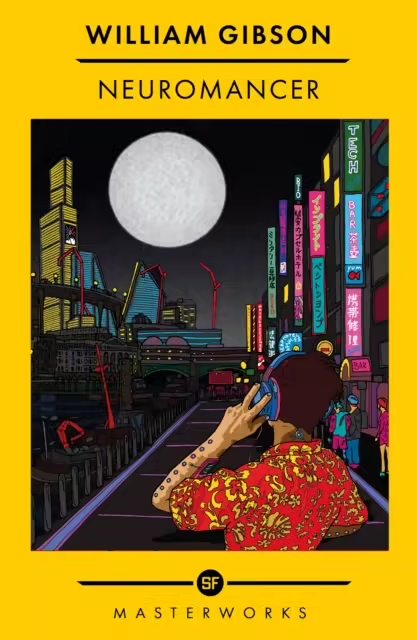
Neuromancer by William Gibson is a science fiction classic that has stood the test of time. First published in 1984, the novel explores themes of technology, artificial intelligence, and the human condition in a gritty “cyberpunk” vision of the future, where people are forced to make difficult choices and compromise their own values and morals in order to survive. It’s one of the most popular science fiction novels of all time selling over 6.5 million copies and has been adapted into various forms of media such as comics, films and video games.
Neuromancer follows Case, a washed-up hacker, given a second chance for a challenging job by a mysterious employer. As he delves deeper, he discovers more than just money at stake. Gibson’s immersive world features complex characters, believable technology, and unexpected plot twists. His poetic prose paints vivid pictures of the dark future, making Neuromancer a fast-paced, thrilling ride.
Neuromancer
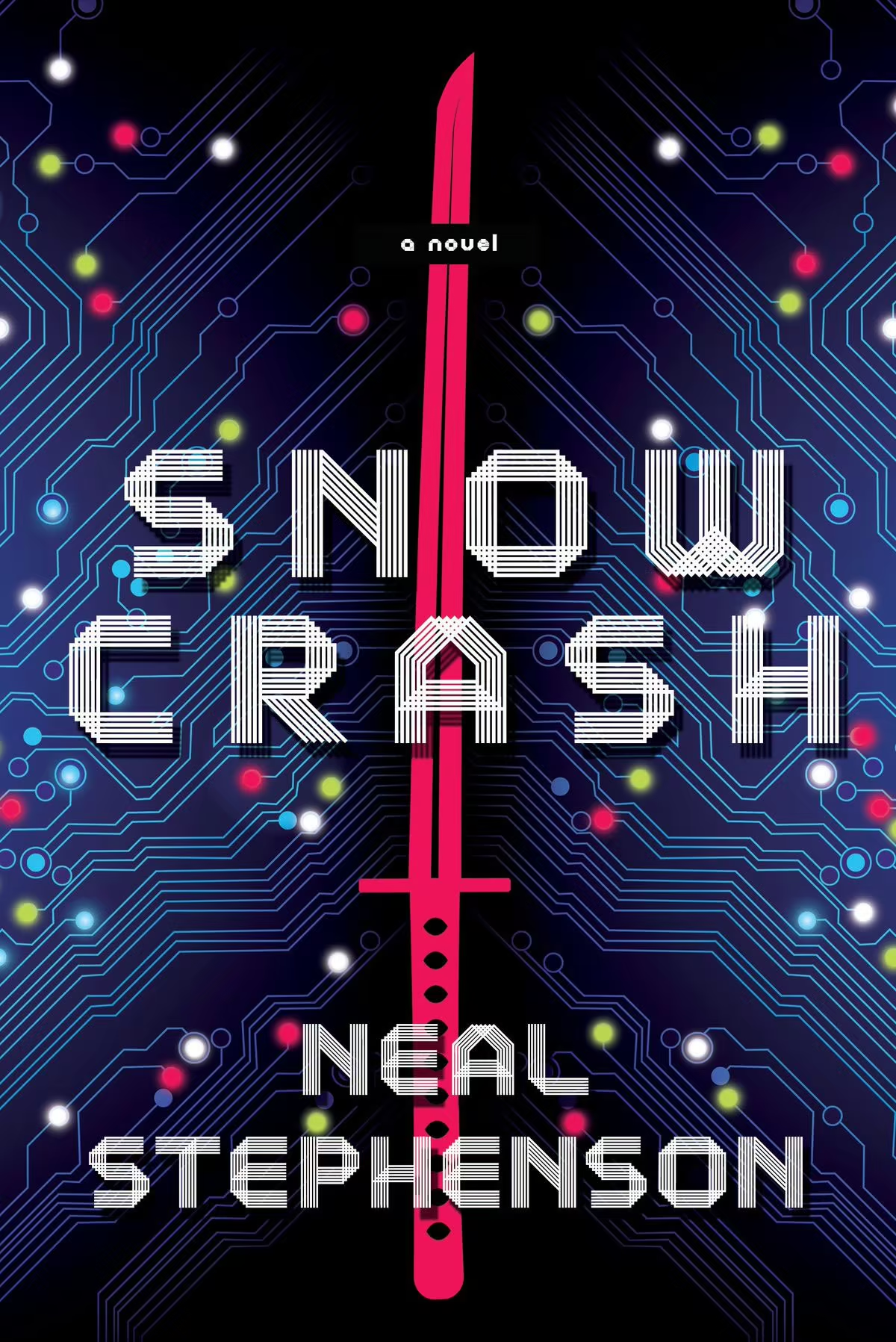
Neal Stephenson’s Snow Crash is a book that predicted the internet, inspired Second Life, and made the word “avatar” popular. It’s a wild, entertaining and scarily accurate story that starts with a crazy car race through a messed up version of LA and doesn’t let go. The main character is named Hiro Protagonist a badass hacker-swordsman combating a viral threat unleashed by a sinister cult. The book is a mix of computer science, ancient myths, and brain language and it even predicts things like social media, digital money, and Google Earth.
Beyond the cybernetic fray, Stephenson deftlyunderscores the need for responsible tech use. Penned in ’92, the novel’s exploration of virtual reality, ethical AI, and societal impacts remains as relevant. Snow Crash’s enduring legacy lies in its profound influence on the cyberpunk genre. It birthed a new wave of tech-centric storytellers and reshaped our perspective on the intersection of technology and society.
We by Yevgeny Zamyatin
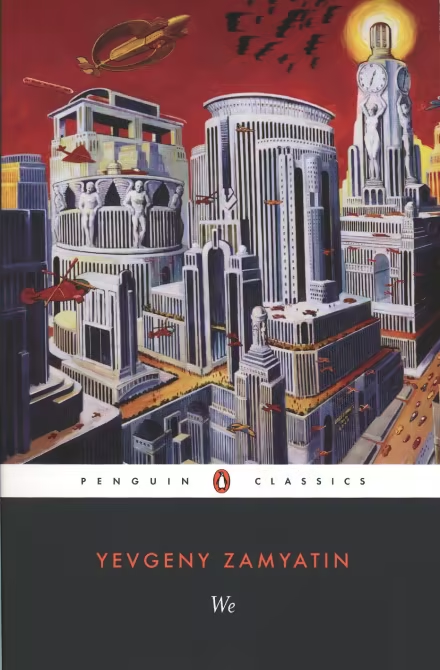
Step into Yevgeny Zamyatin’s “We,” a timeless masterpiece catapulting readers into a dystopian realm where governmental grip strangles personal liberties and free thought. Unleashed upon the literary landscape in 1924, this novel stands as an enduring sentinel, sounding alarms against the encroachment of totalitarianism and championing individual autonomy. Venturing into a world meticulously regulated, inhabitants reside within transparent edifices, stripped of names and reduced to mere digits.
Zamyatin unravels a narrative exploring government machination, spotlighting the insidious role of technology as a weapon of subjugation.This pioneering dystopian saga, released in English three decades prior to its Russian counterpart, etches its influence on the literary canvases of George Orwell, Kurt Vonnegut, and Aldous Huxley, solidifying its indomitable legacy.
Dark Matter
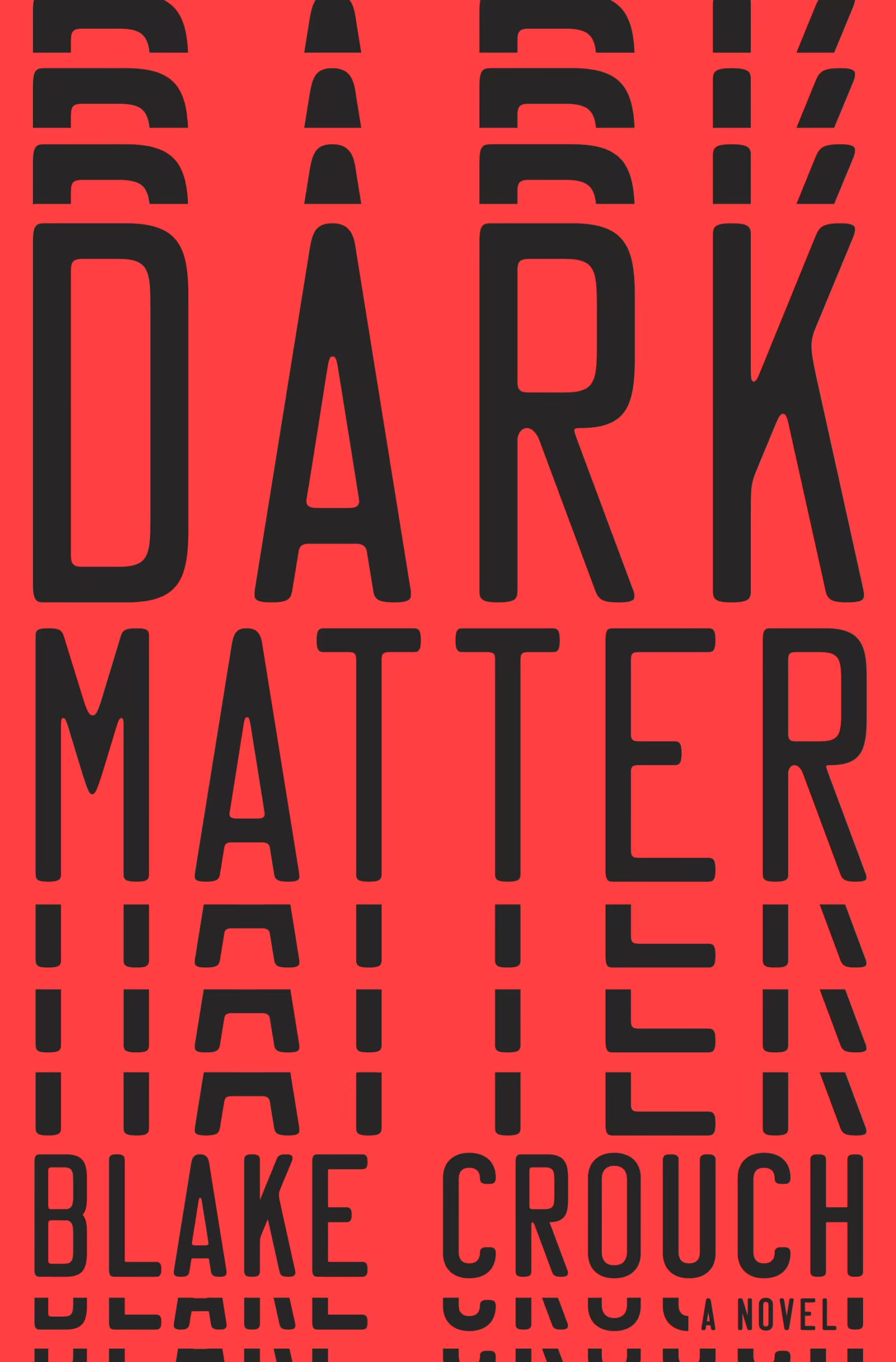
Blake Crouch’s Dark Matter is a mind-blowing sci-fi tale that throws you headfirst into alternate realities, challenging your grasp on the universe. Follow Jason Dessen, a physics prof abducted into a parallel world where his marriage never happened, and his son was never born. The narrative unfolds into a gripping journey, delving into reality’s essence, the multiverse, and the repercussions of our choices. Crouch’s writing zips along, feeling like a cinematic experience that pulls you deep into the plot. Characters, rich and relatable, keep you cheering for Jason in this simultaneously familiar and alien world.
But what I loved most about Dark Matter is how it takes complex scientific concepts and makes them accessible to the average reader. With acclaim and bestseller status, it’s drawn comparisons to sci-fi legends like Philip K. Dick and Michael Crichton.
The Left Hand of Darkness
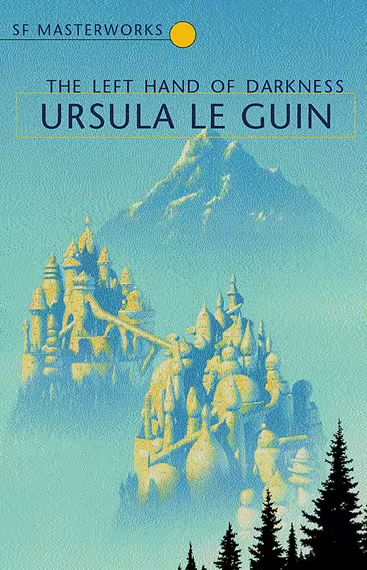
In the 1970s, Ursula K. Le Guin soared to literary stardom with The Left Hand of Darkness, a sci-fi masterpiece that introduces to gender and societal dynamics. In a far-off future, a human envoy named Genly Ai is navigating the frosty terrain of Gethen to enlist its denizens into an intergalactic alliance. Yet, the Gethenians challenge norms; being ambisexual, they effortlessly shift between male and female identities. This unique trait plunges Genly Ai into a whirlwind of cultural disparities, prompting a reevaluation of his preconceptions about gender.
Renowned for reshaping the landscape of science fiction and gender discourse, the book explores interstellar diplomacy and anthropology. Critics laud its transformative impact on feminism and societal perceptions of masculinity and femininity. Le Guin’s inaugural entry in the Hainish Cycle paved the way for fellow sci-fi authors to engage with gender dynamics in their own narratives.
.
Do Androids Dream of Electric Sheep?
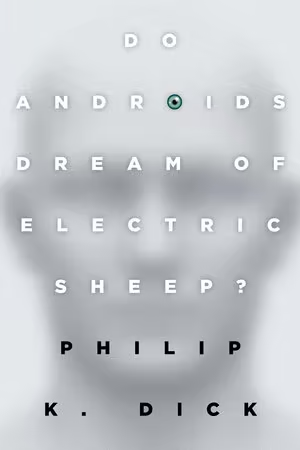
Philip K. Dick’s Do Androids Dream of Electric Sheep? is a game-changing masterpiece, plunging deep into the human condition and probing the hazy boundaries between mankind and artificial intelligence. It weaves a compelling narrative against the backdrop of a dystopian future, scarred by a brutal war that has left humanity teetering on the edge of survival. Dick’s world-building skills shine, vividly portraying a grim and desolate tomorrow where individuals grapple with the quest for purpose. The novel’s brilliance extends to the captivating use of animals as symbols of status
The novel’s imaginative story and incisive commentary on technology and society have cemented its place as a classic. A century and a half after Mary Shelley’s exploration of what makes us human, Dick takes up the question in a thought-provoking and intricately crafted tale that has influenced countless works of science fiction and serves as the basis for the iconic film, Blade Runner.