
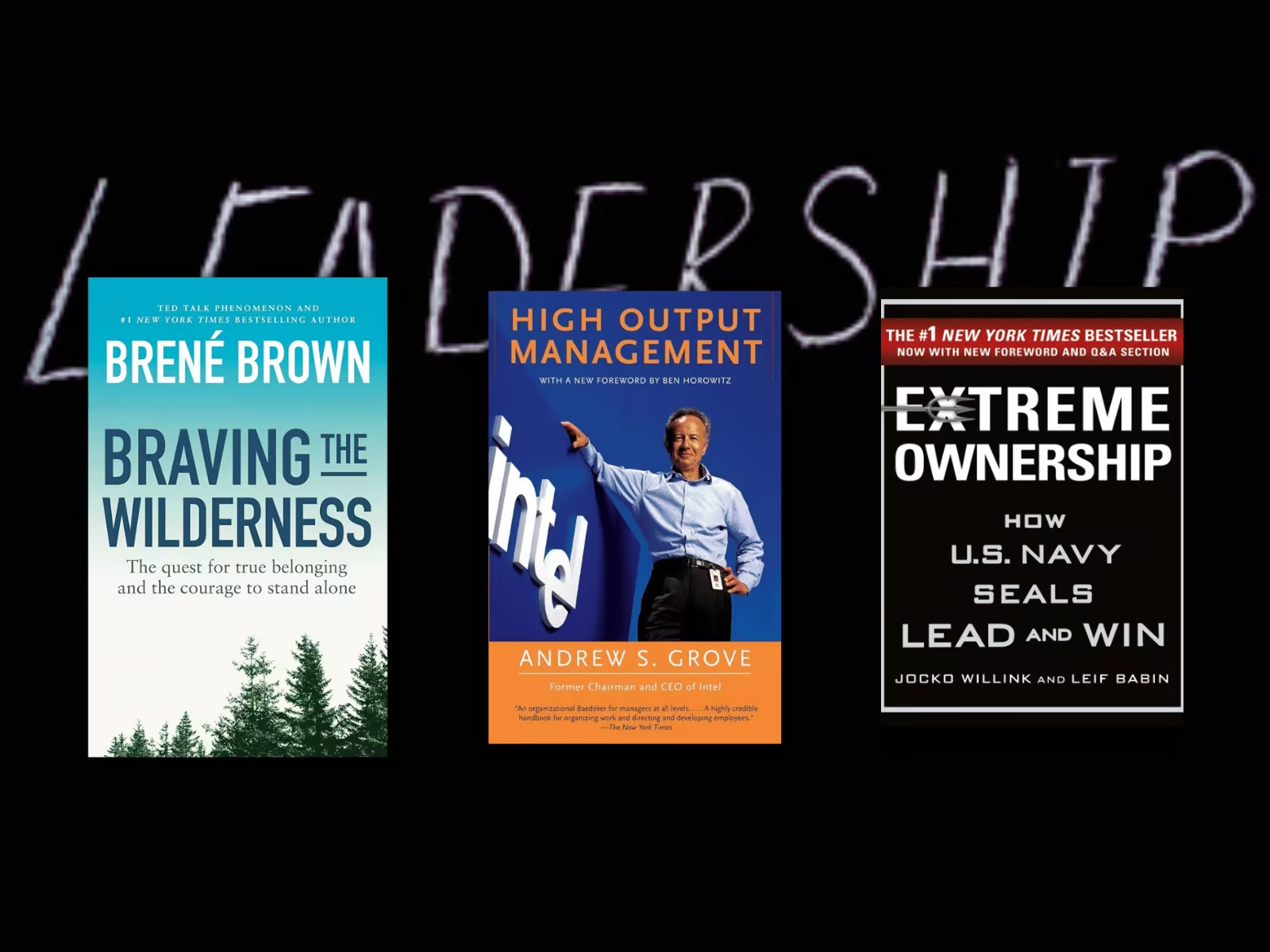
Plans to lead a team are ambitious, and with great ambitions comes great responsibility. Constant learning is one of those responsibilities. If you’re looking to step up your leadership game? Whether you’re leading a team, managing projects, or aiming for thought leadership status in your field, staying on top of your game is crucial. That’s where a killer library comes in handy. Imagine impressing your boss with your commitment to growth by casually mentioning the latest leadership book you’re diving into.
In this article, we’ve curated a list of eleven must-read leadership books to help you level up your skills and make a lasting impact in your career. From timeless classics to modern insights, these books cover everything from effective communication to strategic decision-making.
Multipliers
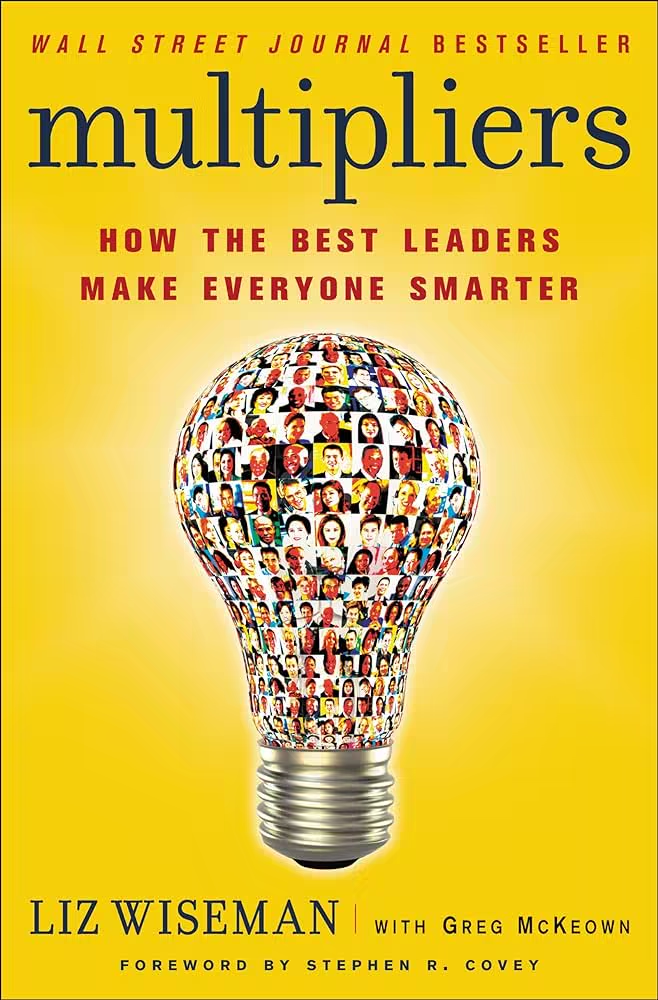
In an era where leadership is often synonymous with authority and command, Wiseman offers a refreshing perspective. Multipliers challenge the traditional notion of leadership by introducing the concept of the multiplier – leaders who, instead of hoarding intelligence and stifling creativity, amplify the smarts and capabilities of those around them. Multipliers tactfully exposes how leaders, often with the best intentions, can inadvertently hinder their teams.
Wiseman identifies what she terms as diminisher behaviors, actions that unknowingly stifle employee potential. Picture this: a leader who acts as a magnet for talent, igniting a collective brilliance that exceeds the sum of its individual parts. Wiseman argues that such leaders, the multipliers, are the secret sauce for unlocking the full potential of a team.
Drive
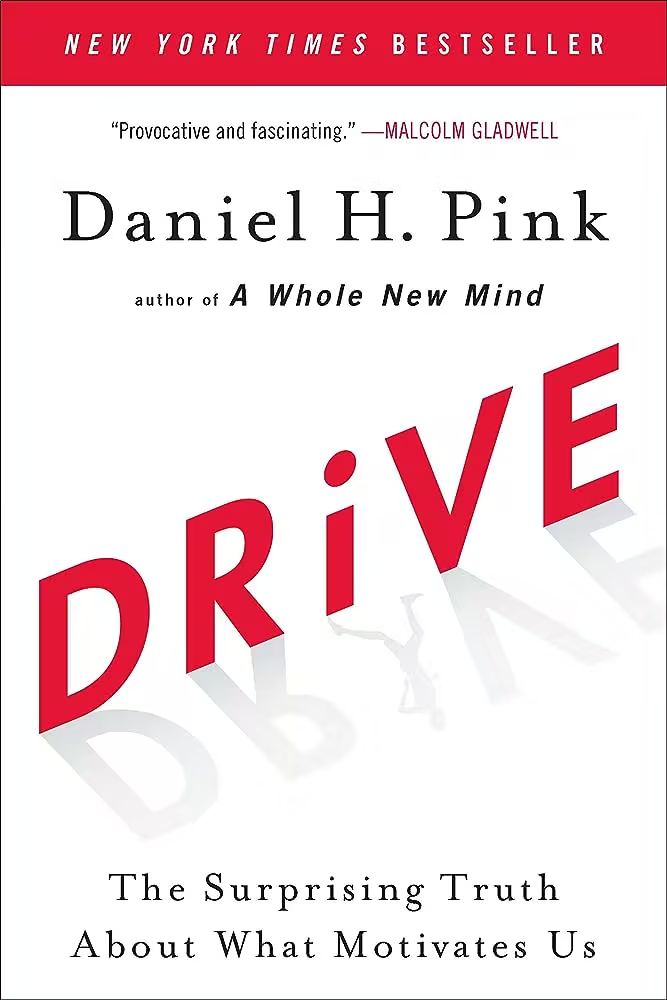
In the cacophony of self-help literature, where promises of success and fulfillment abound, Daniel H. Pink’s Drive stands out as a compelling guide that navigates the intricate landscape of motivation. The engine of Pink’s argument revs up with a departure from the traditional carrot-and-stick approach to motivation. Drawing on a wealth of research and case studies, he dismantles the notion that external rewards alone fuel our performance. Instead, Pink introduces readers to a triad of intrinsic motivators: autonomy, mastery, and purpose.
It’s a paradigm shift that, once embraced, promises to revolutionize the way we perceive and cultivate our inner drive. While the book maintains a lighthearted tone, it doesn’t shy away from addressing the serious implications of its findings. Pink prompts readers to reconsider workplace dynamics, challenging leaders to create environments that foster autonomy and encourage the pursuit of growth.
Radical Candor
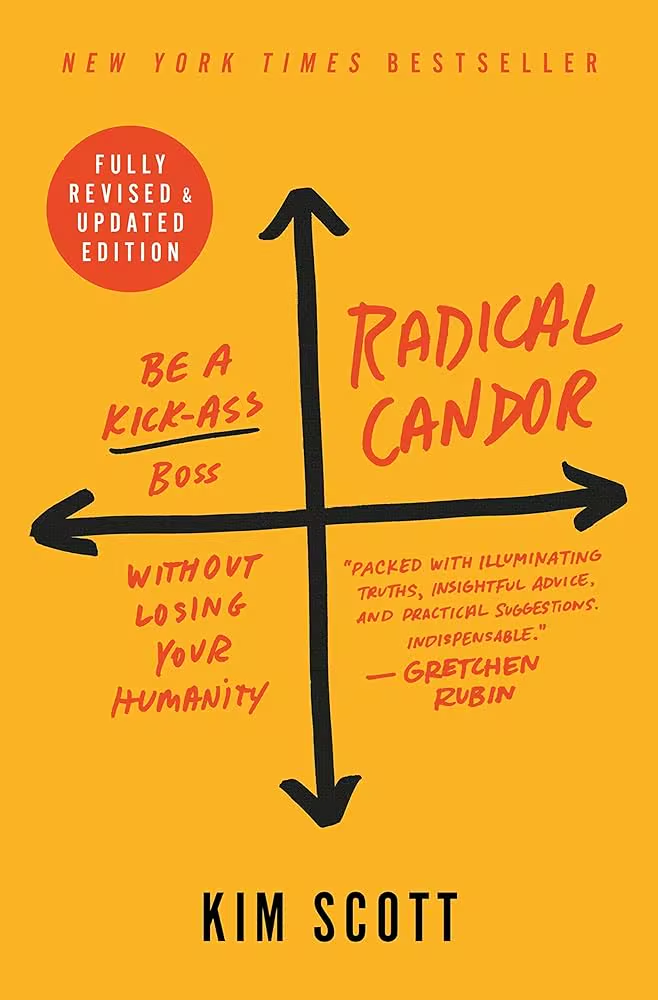
Kim Scott’s Radical Candor stands out as a beacon of refreshment. Far from the traditional, sugar-coated leadership rhetoric, Scott advocates for a direct and sincere approach in her exploration of effective communication in the workplace. She introduces the concept of Radical Candor as a managerial philosophy that encourages leaders to both care personally and challenge directly. Through a blend of personal anecdotes and case studies from Silicon Valley, Scott deftly navigates the nuances of building trust and fostering a culture of open communication.
The book offers a pragmatic approach to feedback, emphasizing the importance of caring personally and challenging directly. By fostering a culture of open communication, leaders can provide honest feedback that is both constructive and empathetic.
Extreme Ownership
Willink, a former Navy SEAL turned leadership consultant, brings an unapologetically assertive voice to the narrative. His writing mirrors his no-nonsense approach to leadership, delivering a message that resonates with the weight of battlefield experience. Extreme Ownership isn’t a casual stroll through leadership theory; it’s a grueling authentic march through the trenches of responsibility. One can’t help but be drawn into Willink’s philosophy of unflinching accountability, and he doesn’t shy away from the complexities of leadership.
The book unveils the SEAL focus principles by distilling battle-tested strategies into actionable insights, providing a blueprint for accomplishing daunting missions. The book vividly illustrates how teams undergo a metamorphosis when leaders fully embrace Extreme Ownership, fostering a culture of accountability that transcends adversity.
Emotional Intelligence 2.0

In a world that often glorifies cognitive prowess, Emotional Intelligence 2.0 by Travis Bradberry and Jean Greaves stands as an alternative, illuminating the often overlooked landscape of emotions. Released in the early 2000s, this book has become a cornerstone in the self-help genre, offering readers a roadmap to harnessing the power of emotional intelligence. Bradberry and Greaves introduce the concept of Emotional Intelligence (EI) as a skill set comprising self-awareness, self-regulation, motivation, empathy, and social skills.
The book provides concrete tactics to enhance emotional awareness, guiding readers to navigate their own feelings and decipher the emotions of people that you interact with, both authors reveal the secret to success, attributing a staggering 80% to emotional intelligence.
The Effective Executive
The Effective Executive by Drucker. Published over half a century ago, this classic work has become a guiding light for leaders navigating the challenges they may stumble upon. Drucker’s thesis centers on essential practices that transform a manager into an effective executive; with time management, focusing on strengths and setting priorities being the most essential principles that form the backbone of countless leadership seminars and business school curricula. Yet, as we step back from the glossy idealism of Drucker’s prescriptions, a more nuanced picture emerges.
The corporate landscape has evolved since the 1960s, and so executives are asked to adapt. However despite these critiques, The Effective Executive deserves recognition for sparking important conversations around leadership and productivity. Its influence can be felt in the myriad self-help books and management literature that followed, shaping the collective consciousness of generations of leaders.
Braving the Wilderness
Brown, a scholar and storyteller, embarks on a compelling exploration of what it truly means to belong in a society that often values conformity over individuality. The metaphorical wilderness she speaks of is not a physical place, but a space within ourselves where we confront our deepest fears and vulnerabilities. It’s the uncharted territory of the human spirit, and Brown invites readers to brave this unknown landscape with courage and authenticity. She brilliantly tackles the rhetoric that leadership demands self-transformation.
Brené Brown asserts that true leadership arises from embracing one’s authentic self. The book also navigates the art of impactful communication by providing insights into discussing ideas, feelings, and fears with vulnerability and courage.
The Coaching Habit
In a world saturated with self-help manifestos and leadership manuals, Michael Stanier’s The Coaching Habit emerges as a refreshing departure from the conventional. The book, at its core, challenges the established norms of coaching, urging leaders to embrace brevity and simplicity in their interactions. Stanier contends that by asking a few key questions, leaders can cut through the noise and unlock the true potential of their teams. Through strategic questioning, Stanier provides a roadmap for keeping coaching discussions purposeful and on track.
By encouraging leaders to adopt a habit of concise inquiry, the book transforms meandering dialogues into targeted and effective exchanges. It’s a masterclass in steering coaching conversations with intention, ensuring that every interaction contributes meaningfully to professional growth.
Leaders Eat Last
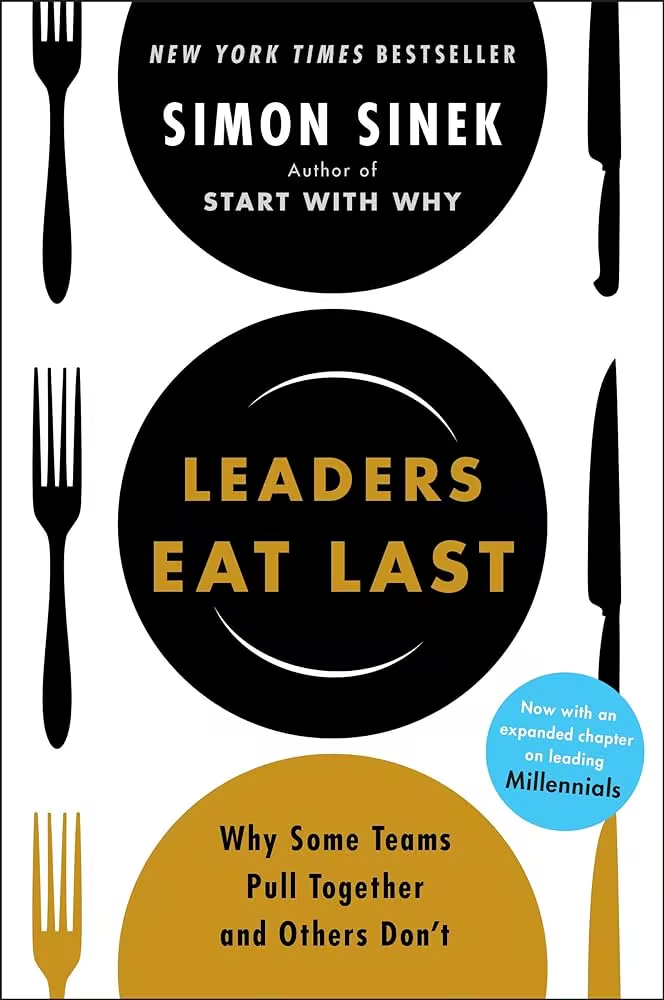
Are you genuinely passionate about your job? If you find yourself nodding, you’re part of the fortunate minority thriving in an environment where leaders prioritize the welfare of their team. Now, for those who shook their heads, fret not; There is hope. You can learn how to create such an environment, like how Simon’s Sinek explores in this book. Why leaders eat last delves into the idea of selfless leadership, skillfully linking the conduct of tribal communities with today’s organizational dynamics. This exploration redefines authentic leadership.
The narrative’s allure lies in Sinek’s adept storytelling, weaving captivating anecdotes and case studies to underscore his insights. Why Leaders Eat Last not only captivates with its storytelling finesse but also addresses contemporary leadership dilemmas. In an era fixated on employee well-being, Sinek’s guide becomes indispensable, charting a course for leaders to forge a united and resilient team.
The Five Dysfunctions of a Team
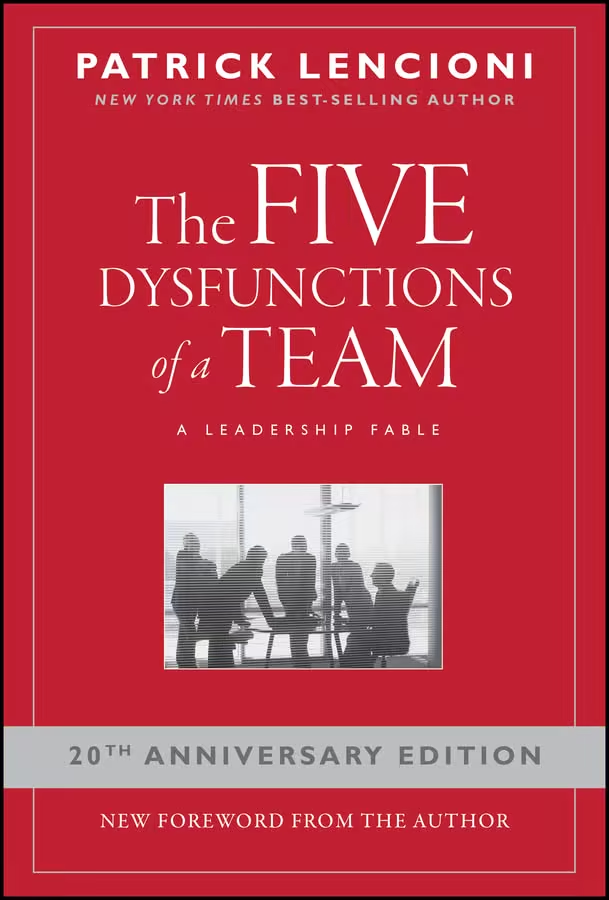
Triumph in collaborative efforts boils down to embracing a concise set of principles consistently over an extended period. Patrick Lencioni’s The Five Dysfunctions of a Team is a key guide in contemporary business literature. Lencioni taps into our innate affinity for stories, and so narrates the dysfunctions within the fictional world of Decision Tech—a Silicon Valley startup spearheaded by the pragmatic CEO, Catherine. Furthermore, Lencioni’s interpersonal acumen shines, offering readers actionable insights applicable in organizational landscapes.
His narrative prowess not only paints the portrait of dysfunctions but also underscores practical strategies for building trust, fostering constructive criticism, instilling accountability, nurturing commitment, and achieving tangible team success. The dysfunctions he pinpoints resonate universally, and his pragmatic counsel is essential and must-read for leadership teams looking to enhance collaboration.
High Output Management
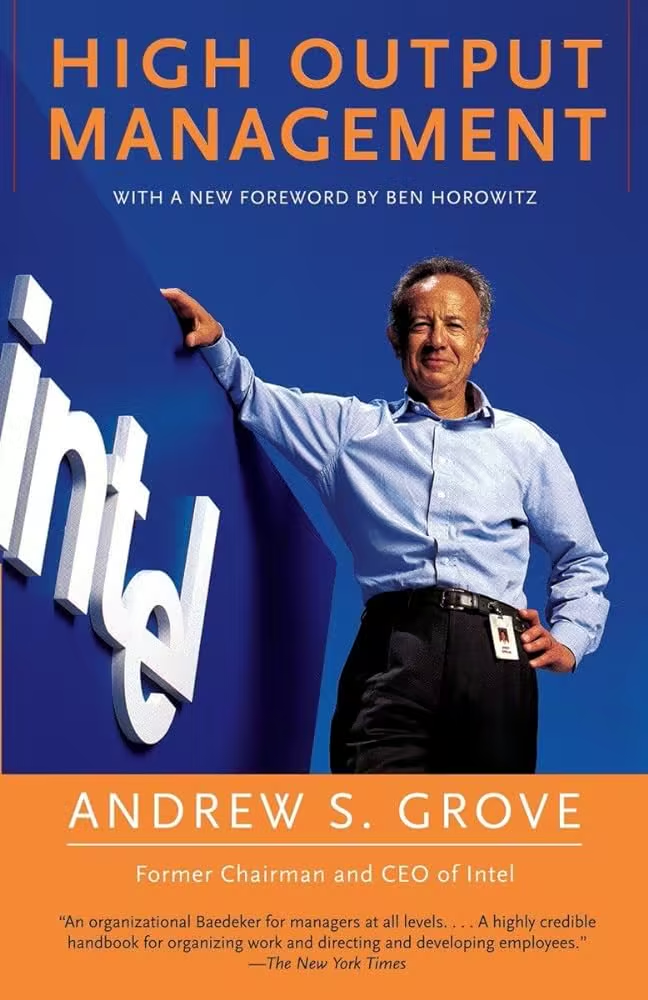
High Output Management is a fantastic read for anyone looking to improve their leadership skills This gem serves up a thorough exploration of a manager’s gig, dishing out real-world tips on handling folks and ideas The book orbits a central idea: a manager’s goal is to crank up the output of those around him. An ace move you glean from this read? The importance of leveraging your time and resources as a manager. A key manager should therefore choose high-leverage activities that send ripples across the team, his subordinates and peers.
The true measure of a manager’s output lies in the team’s performance. Andy’s approach to people, characterized by a willingness to admit fallibility and engage in hands-on work, is commendable. This book proves valuable for both new and seasoned managers, providing useful frameworks and strategies for various common managerial tasks.