You feel like ready to kickstart your journey into the exciting world of tech? Whether you’re a recent grad or pondering a career shift, diving into the tech space can be daunting, but like any other career; it starts with reading canonical and formative books.
Introducing our treasure trove of must-read books tailored for tech enthusiasts like you! From demystifying programming languages to unlocking the secrets of deep work, we’ve curated a list that’s as engaging as it is enlightening.
For this time, we decided to create a book guideline, for people who are interested in pursuing a career in tech.
The Pragmatic Programmer
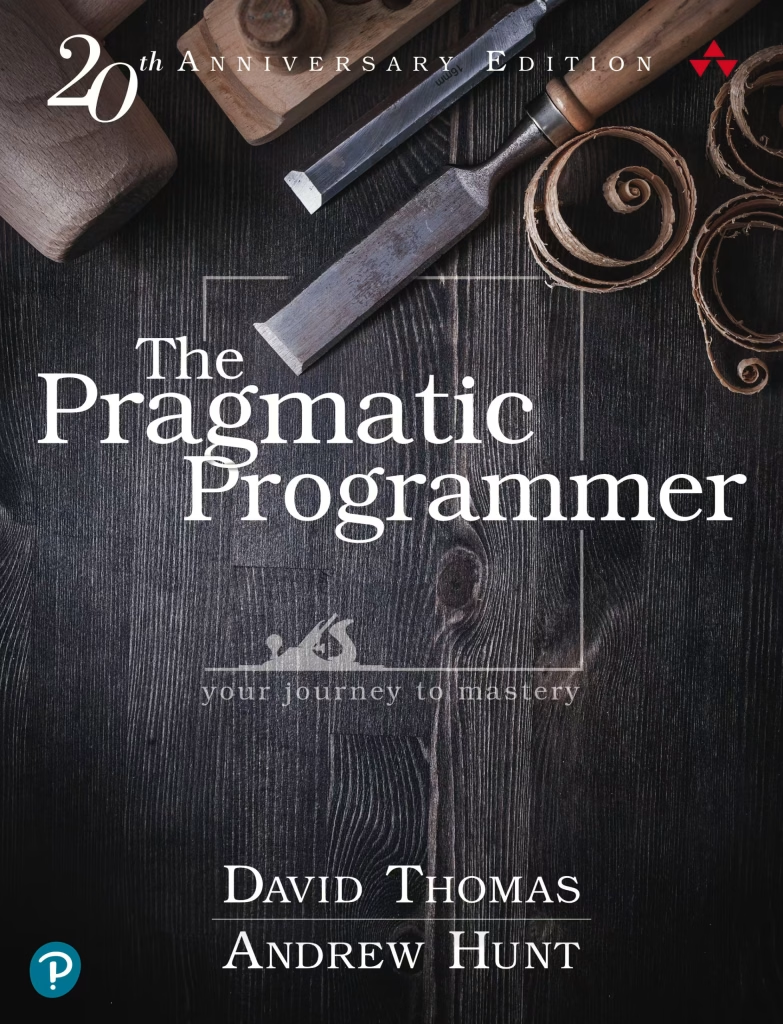
This guide dishes out practical wisdom that resonates across diverse development projects. The Pragmatic Programmer transcends niches and languages, offering universal principles. It hones in on key traits of a pragmatic programmer: early adoption, swift adaptation, inquisitiveness, critical thinking, realism, and more. Backed by numerous examples and anecdotes, the book navigates through the best approaches and common pitfalls in various programming languages, frameworks, and methodologies, catering to a broad spectrum of software development scenarios.
Written in a friendly, accessible style, the content is a breeze to grasp and swiftly apply. In a tech realm often mystifying to outsiders, this book breaks the norm. Many programmers are self-taught in an industry yet to mature fully. With ongoing refinement, this could become the go-to classic for introducing practical-minded newcomers to the intricate world of computer programming.
Grokking Algorithms
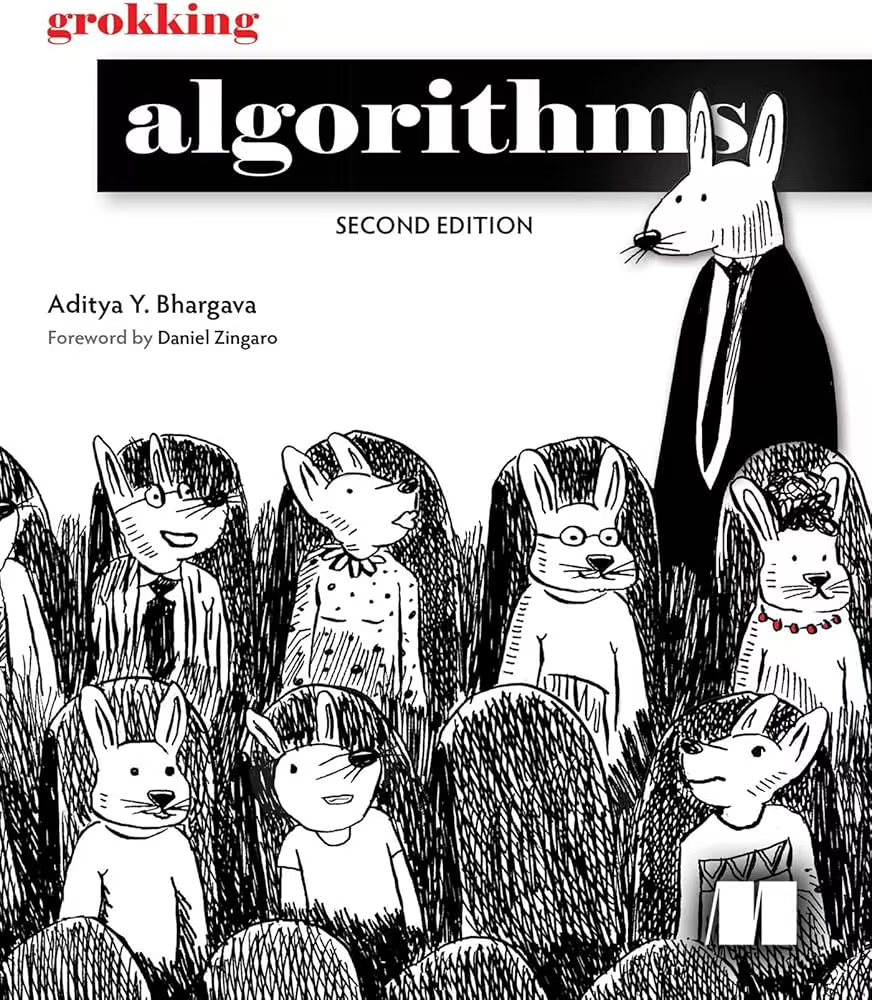
Algorithms often intimidate newcomers, but this book manages to make them feel surprisingly approachable. Instead of throwing readers into a maze of formulas and proofs, it walks through each idea with friendly explanations and clear illustrations. Topics like recursion, breadth first search, and greedy strategies stop feeling abstract and start feeling like practical tools you can use to solve everyday programming problems. That sense of clarity is exactly what makes it stand out for beginners who want to understand the logic behind efficient code without getting lost in heavy theory. In Grokking Algorithms, You are never asked to memorize definitions or grind through pages of math.
You are guided through small examples that show how different approaches shape the performance of a program and why one solution might be more elegant than another. By the time you reach the later chapters, you begin to recognize patterns rather than fear them, and that shift in mindset is tremendously empowering. Grokking Algorithms gives readers a gentle but meaningful entry point into one of the most important foundations of computer science.
Clean Code
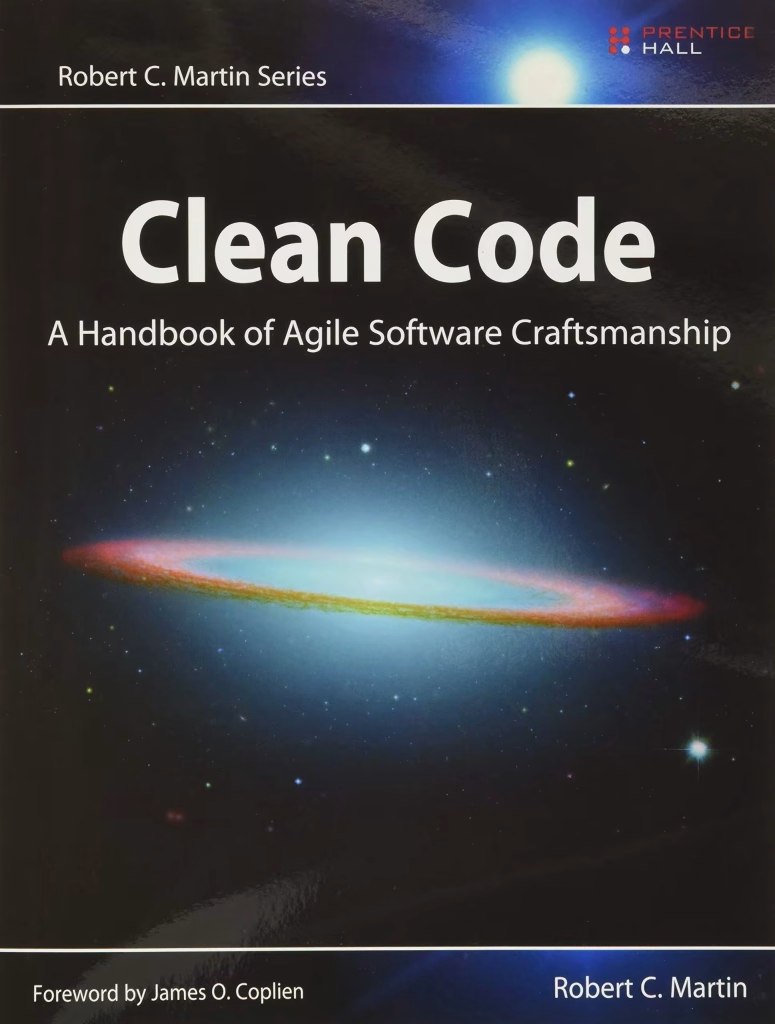
A few recommended books for software engineers aiming to enhance their clean code writing skills exist, and my personal favorite among them is Clean Code by Robert C. Martin. In the pursuit of expanding our knowledge, we delve into various programming languages, explore designs, patterns, and adopt good coding practices. However, the aspect of crafting good, readable code is often overlooked. The significance of Robert C. Martin’s book is immense; it’s not only essential for programmers but also warrants consideration by educational providers.
While there are other valuable resources on the art of writing clean code, coding proficiency, like any skill, demands consistent practice. Fortunate individuals may have the guidance of a skilled mentor or senior engineer within their team, facilitating the acquisition of sound coding habits and styles through a series of code reviews. Clean Code stands out as one of those indispensable handbooks.
Deep Work
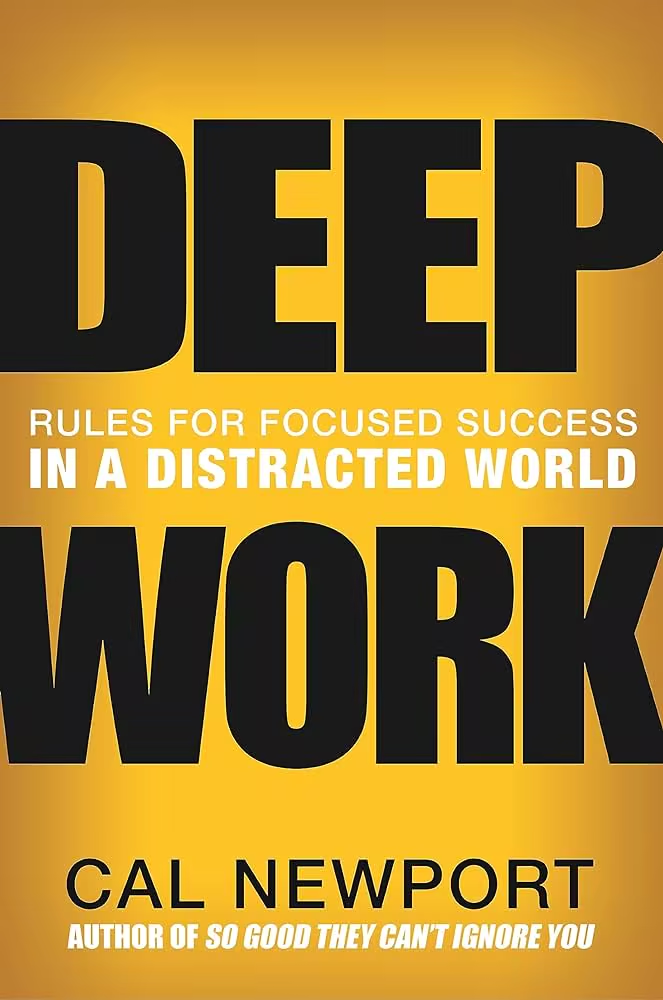
We all aspire to be more productive, but what are some of the most fundamental techniques we need to use for enhanced productivity? This book provides the answers. It is written by computer science professor Cal Newport is a book that introduces the concept of deep work, which involves focusing intensely on a single task for an extended period without any distractions. The main principle emphasized in the book is the distinction between shallow work and deep work, offering readers the awareness required to effectively schedule their time
The key is to prioritize periods of deep work, characterized by intense and focused efforts usually in short bursts. This approach allows us to achieve the highest quality output in the time invested. Cal Newport’s Deep Work is a valuable resource for programmers, The concept of deep work has resonated with those required to churn out high amount of output eg. software programmers, engineers etc.
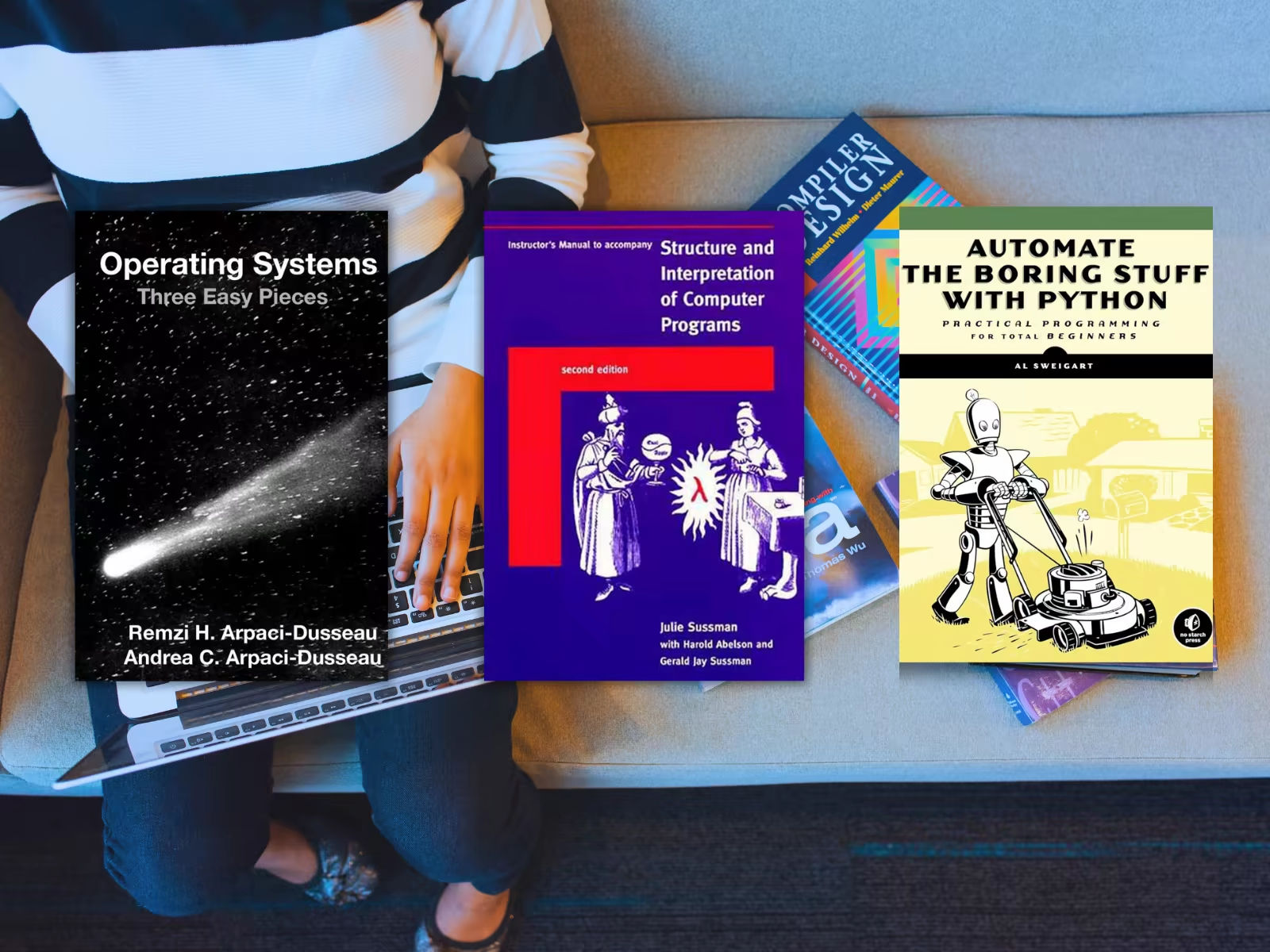
Structure and Interpretation of Computer Programs
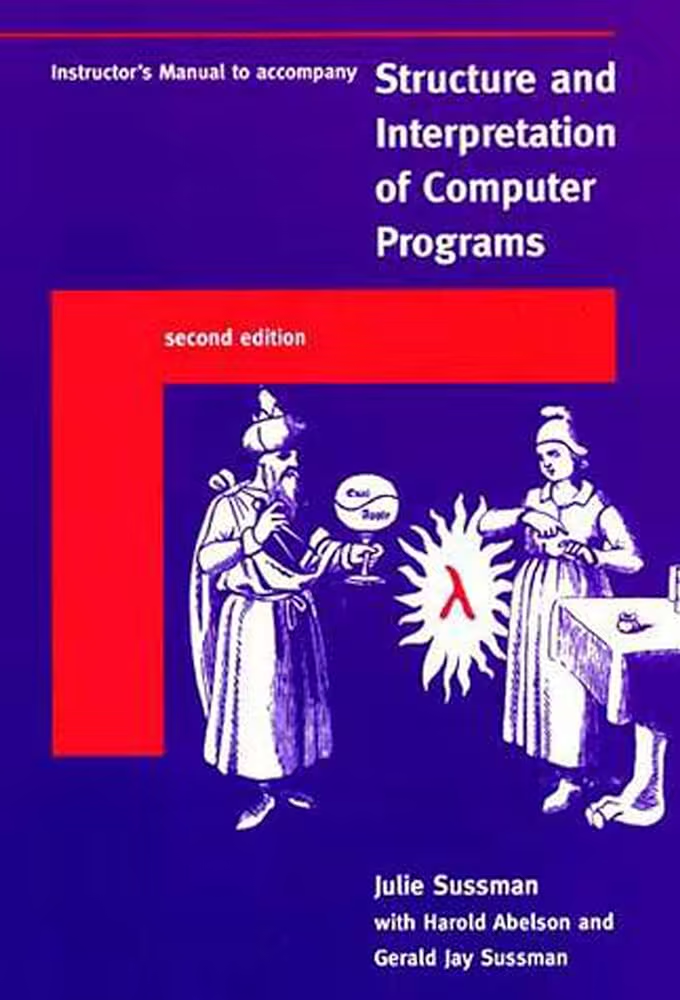
One book stands as the North Star for aspiring coders, a celestial guide that illuminates the path to programming enlightenment: “SICP”. If programming were a secret society, this book would be its sacred text, revealing the arcane arts of coding in a way that captivates the mind and transforms novices into wizards of logic. The beauty of this book lies not just in its ability to teach programming but in its power to alter your perception of problem-solving.
As it unveils various features, the book consistently underscores its central theme. It methodically introduces elements of functional programming, aiding in mastering new languages by highlighting fundamental aspects. By progressing toward a programming language theoretically as potent as contemporary ones, it aids in mastering new languages by spotlighting the genuinely fundamental aspects.
Computer Systems: A Programmer’s Perspective
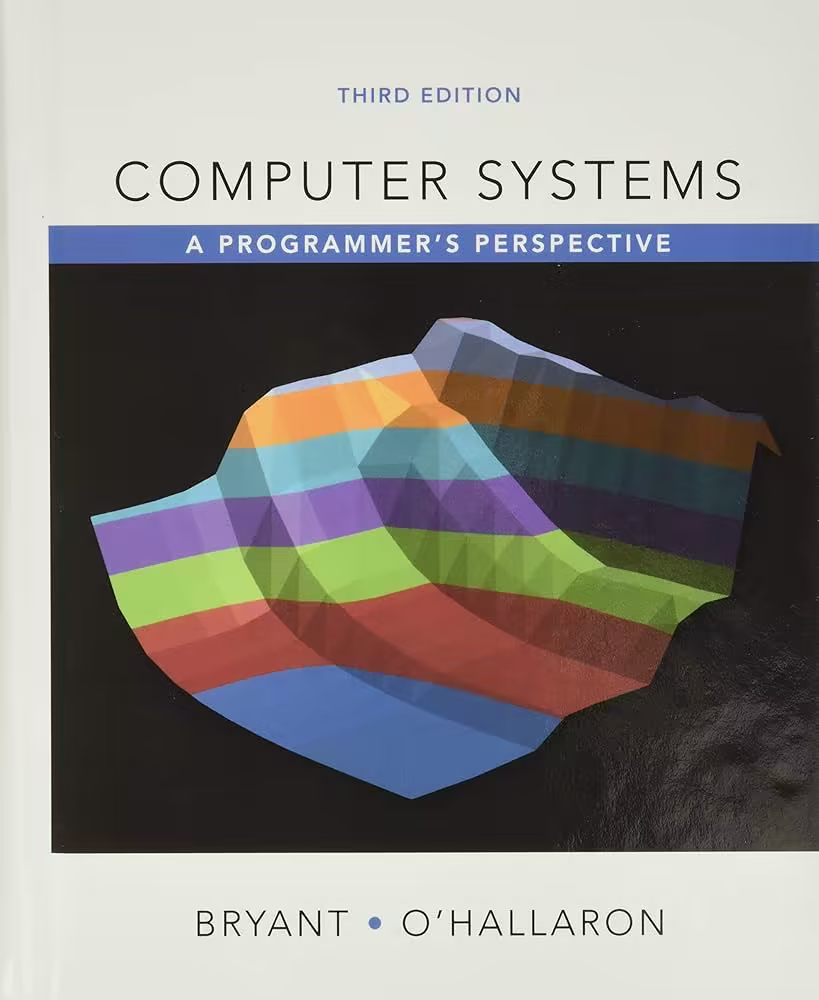
Books elucidating the foundational principles of computer organization often overlook the programmer’s perspective. In contrast, the book in question lives up to its title by thoroughly exploring computer systems from the viewpoint of a programmer. The allure for many programmers lies in comprehending the intricate details of program construction and execution. For a programmer, the ultimate ambition is to construct a computer from the ground up and execute a program without relying on a compiler.
If you’ve ever pondered the intricacies of how an executable file loads into memory and the CPU instructions that execute the program, then this book is tailored for you. Some have criticized it for being overly academic. While there is some truth to that claim, I believe this book remains essential as it aims to provide a solid foundation.
Operating Systems: Three Easy Pieces
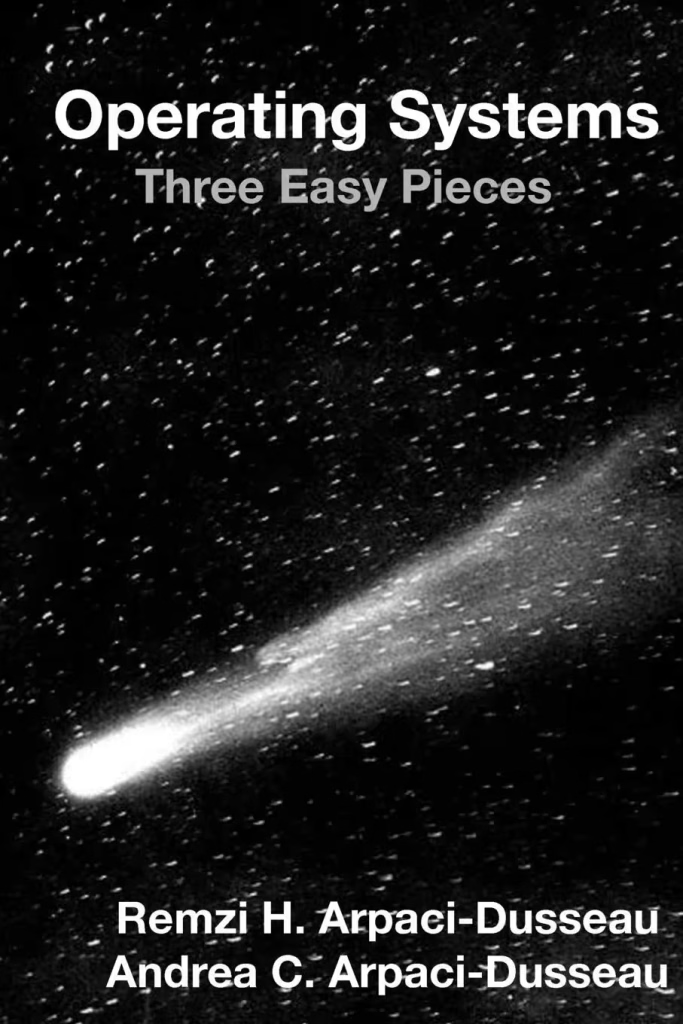
The book that promises to demystify the complexities of operating systems. It serves as an excellent resource for understanding the interconnected ideas within OS, offering practical insights through homework exercises at the end of each chapter. It also provides an abundance of references, allowing you to branch out. The book cleverly breaks down the complexity into three digestible chunks – virtualization, concurrency, and persistence. Each piece is like a puzzle, and by the end, you’ll find yourself not just solving it but creating your own.
Surprisingly, despite its technical nature, the book is an engaging read, incorporating humor, dialogues, and the authors’ reflections on each reference. It even features an Easter egg related to another OS Concepts book. In essence, this textbook stands out for its exceptional quality. The authors communicate with clarity, delving into various aspects of the subject matter with keen eye on details.
Designing Data-Intensive Applications
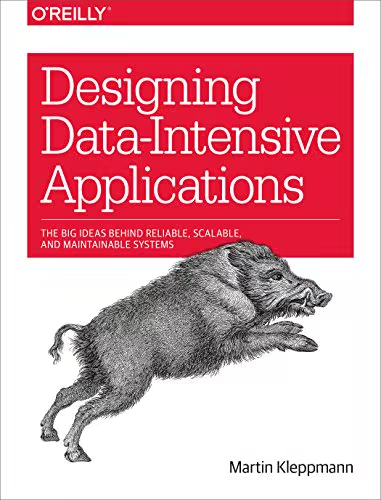
This book navigates the complex web of choices and challenges that architects and developers face when dealing with the deluge of data in today’s applications. The book’s core strength lies in its profound exploration of the trade-offs inherent in different technologies. In a world where every system is a distributed system, understanding the nuances of algorithms, scaling capabilities and safety guarantees and availability becomes paramount. The author skillfully guides the reader through the labyrinth of choices, shedding light on why certain technologies may be better suited for specific workloads than others.
The engaging writing style of the author further enhances the learning experience, making the book a valuable resource for anyone looking to deepen their understanding of the challenges and solutions related to designing data-intensive applications