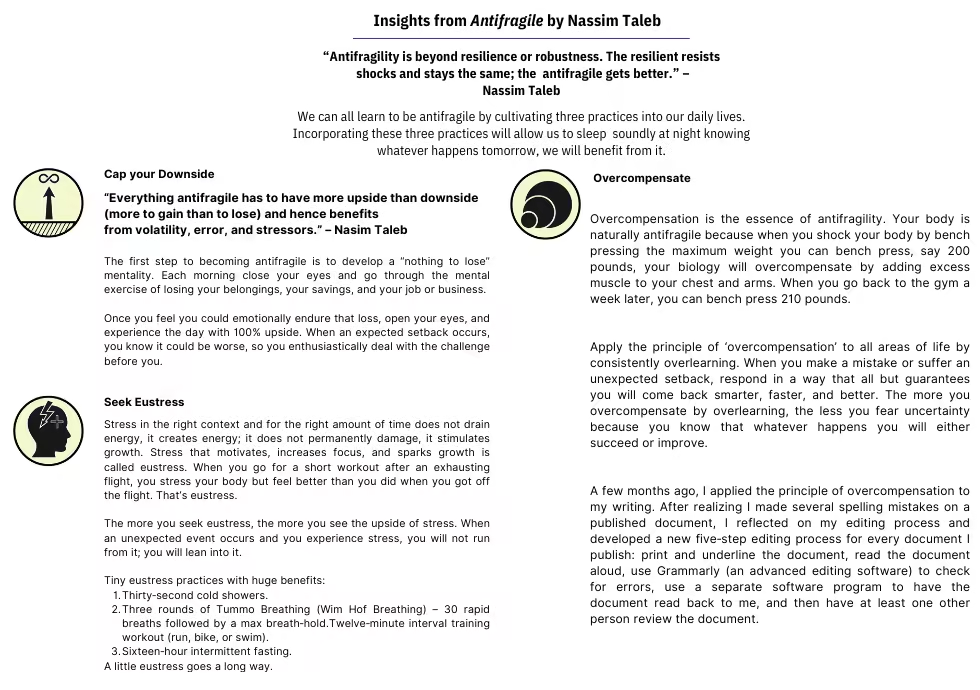
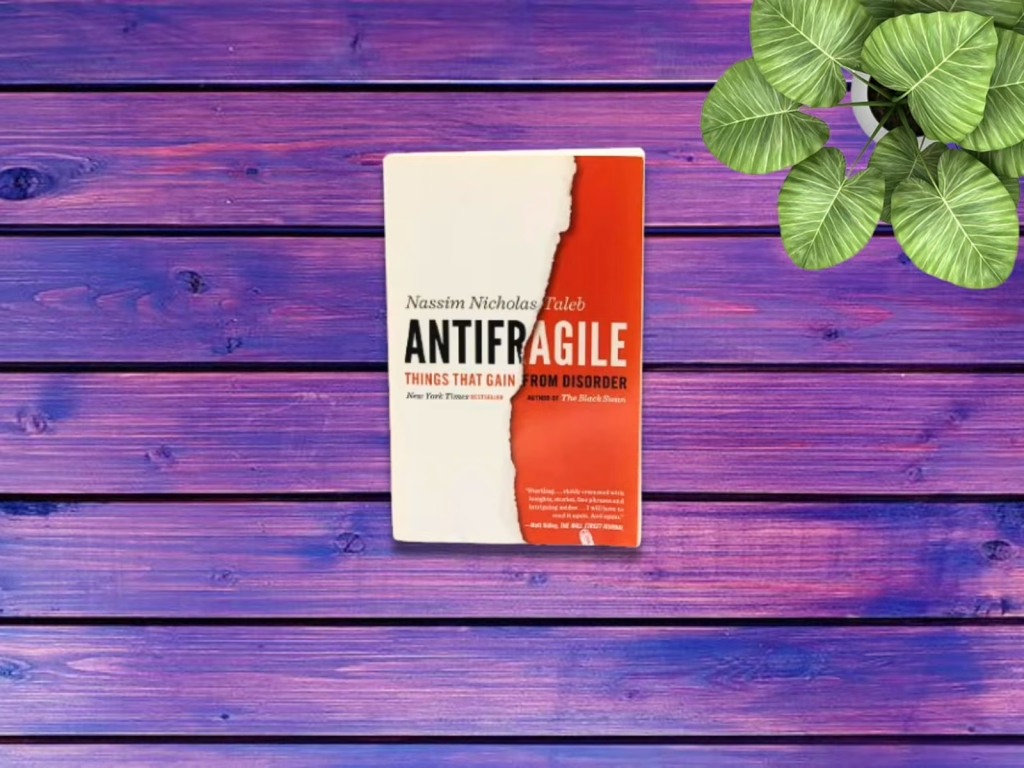
Antifragile by Nassim Taleb introduces the concept of antifragility, which describes systems or entities that benefit from shocks, volatility, and uncertainty rather than being harmed by them. Taleb contrasts antifragility with fragility and resilience, arguing that antifragile systems not only withstand chaos but thrive in it. By understanding and harnessing antifragility, individuals and organizations can better navigate and even capitalize on unpredictability.
Nassim Nicholas Taleb is a Lebanese-American essayist, scholar, statistician, and former trader and risk analyst. He gained widespread recognition for his work on probability and uncertainty, notably in his bestselling books Fooled by Randomness, The Black Swan, and Antifragile.
Key Takeaways:
- Fragile individuals are like candles, easily extinguished by unexpected events.
- Resilient individuals, akin to torches, can withstand shocks but return to their original state.
- Antifragile individuals are like bushfires, not just enduring shocks but thriving because of them.
- Cultivating practices of antifragility can lead to a mindset where one benefits from adversity.
Some Quotes:
- Wind extinguishes a candle and energizes fire. … You want to be the fire and wish for the wind.
- Some things benefit from shocks; they thrive and grow when exposed to volatility, randomness, disorder, and stressors.
- Antifragility is beyond resilience or robustness. The resilient resists shocks and stays the same; the antifragile gets better.
- Difficulty is what wakes up the genius.
- Everything antifragile has to have more upside than downside (more to gain than to lose) and hence benefits from volatility, error, and stressors.